You keep hearing the word Kanban. Your coworker uses it. Your favorite productivity blog mentions it. Project management tools have it as a feature. But what does it actually mean? And why does a method invented in a car factory 80 years ago still matter today?
Let's break it down. No textbook language. No jargon. Just a clear, simple explanation of what Kanban is, where it came from, and why millions of people use it to manage their projects.
Where Kanban Comes From
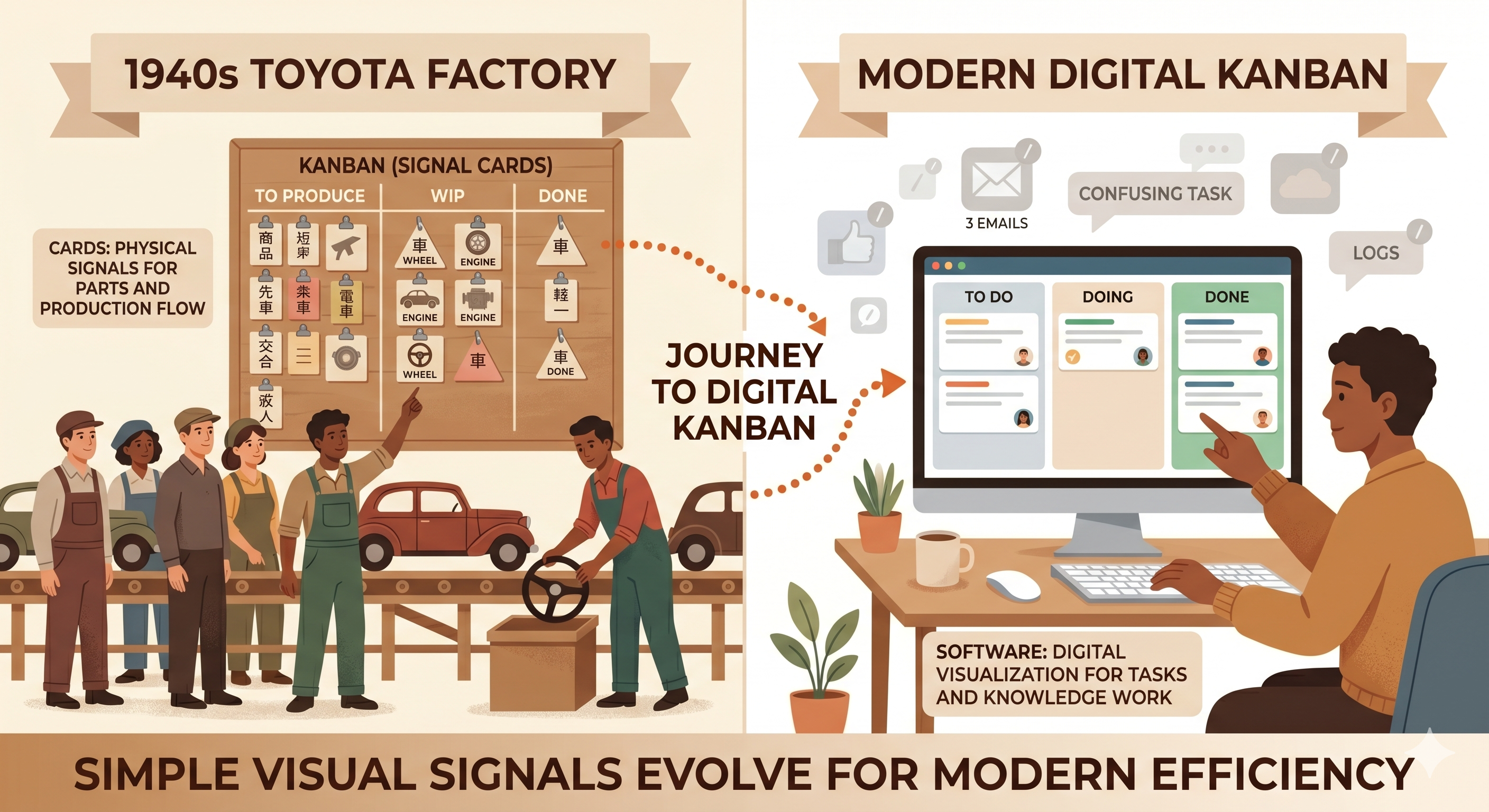
Kanban was born at Toyota in the late 1940s. The word is Japanese — it translates roughly to "visual signal" or "visual card."
Here's what happened. Toyota's engineers noticed that supermarkets only restocked items when the shelf was getting empty. They didn't push out more products than customers needed — they waited for a signal that said "we need more."
Toyota applied this idea to their factories. Instead of producing parts in huge batches and hoping they'd be needed, workers used cards — kanban cards — to signal when more parts were needed. Only then would the next step in the process begin.
The result? Less waste, smoother production, and fewer bottlenecks. It was simple and it worked beautifully.
How It Became a Project Management Method
In the early 2000s, people in the software industry realized that Toyota's system could work for more than car parts. Tasks in a software project move through stages too — planned, in progress, testing, done. The flow is the same.
David Anderson is often credited with bringing Kanban into knowledge work. He took the core principles — visualize your work, limit what's in progress, improve continuously — and applied them to software teams.
It worked. And it didn't stop with software. Marketing teams, design agencies, schools, hospitals, freelancers — once people saw how a simple board with cards could organize any kind of work, Kanban spread everywhere.
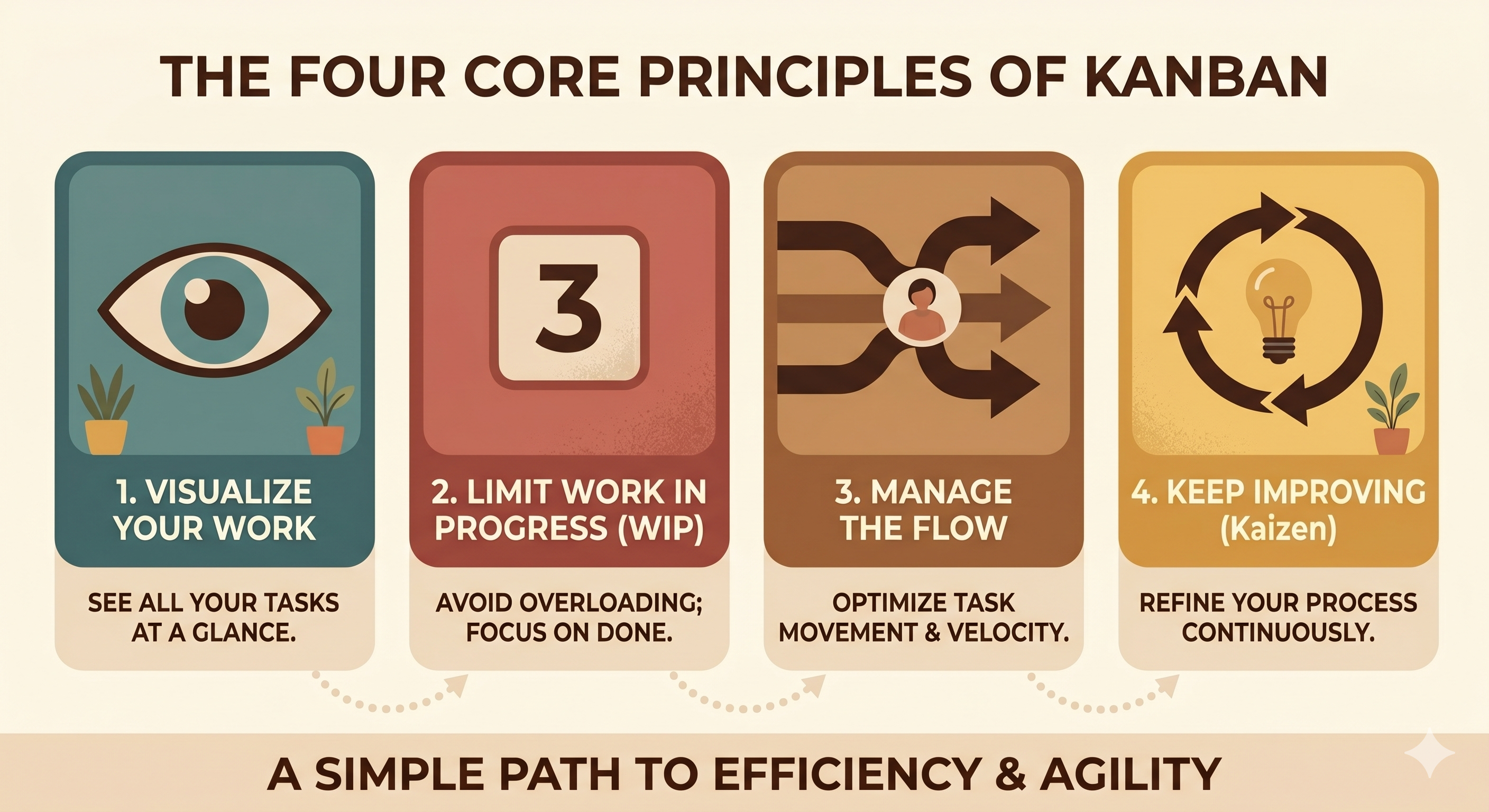
The Core Principles of Kanban (Without the Jargon)
Kanban as a methodology comes down to four ideas:
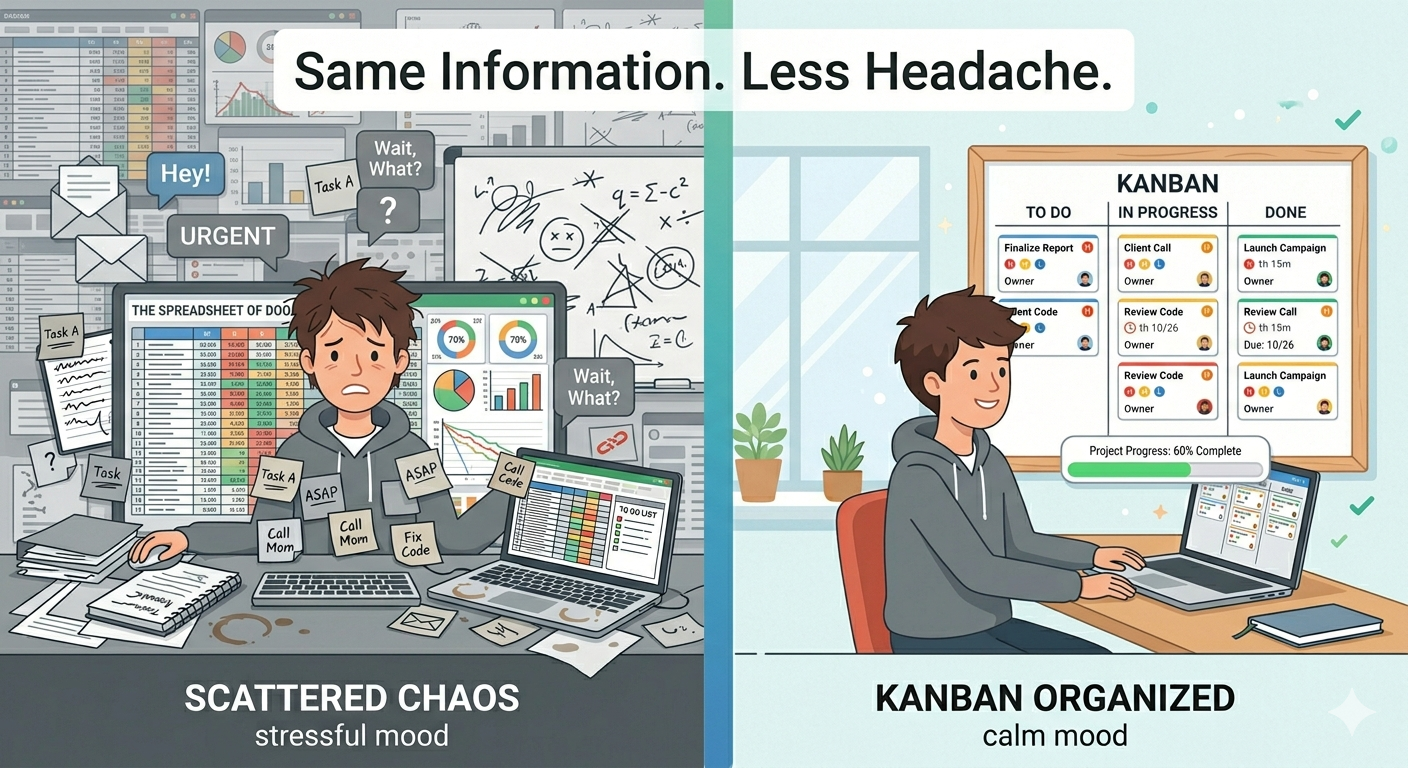
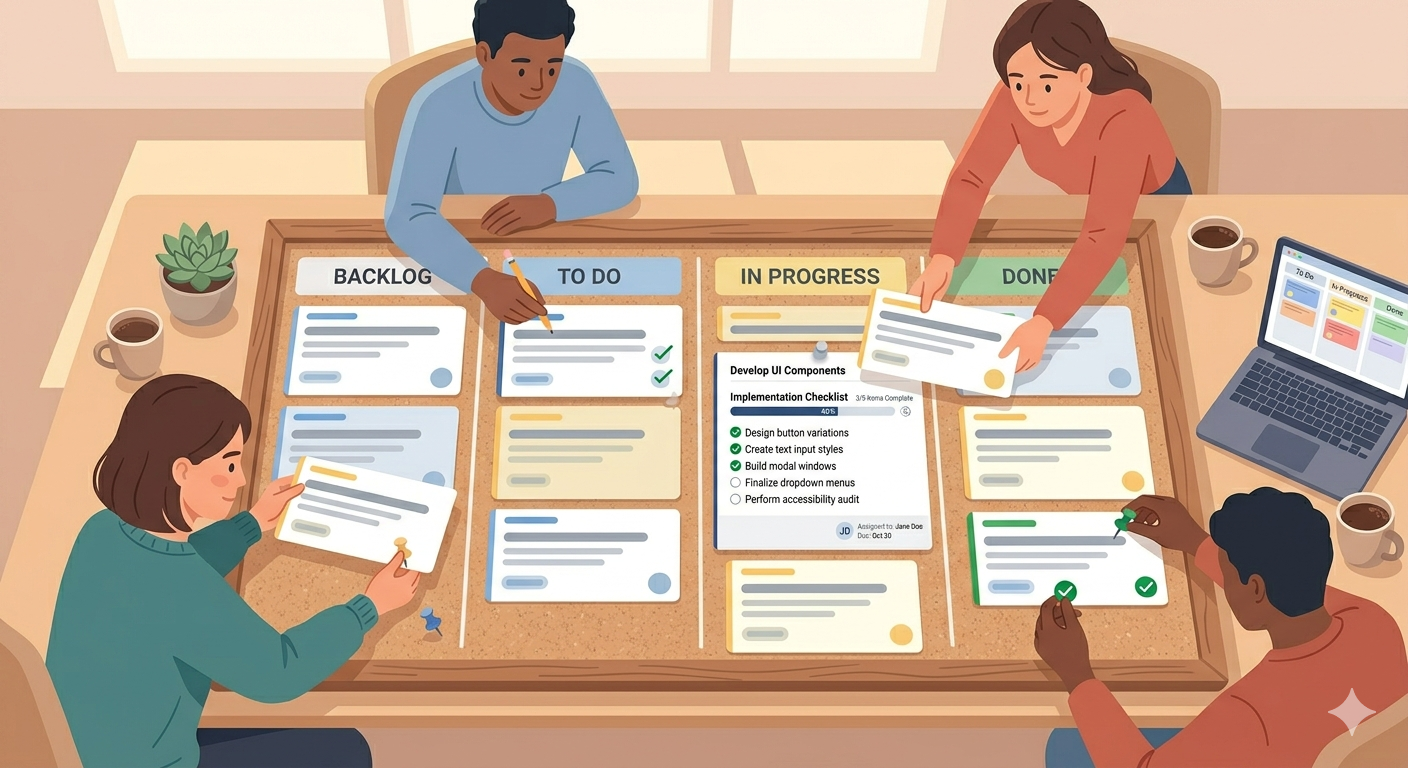
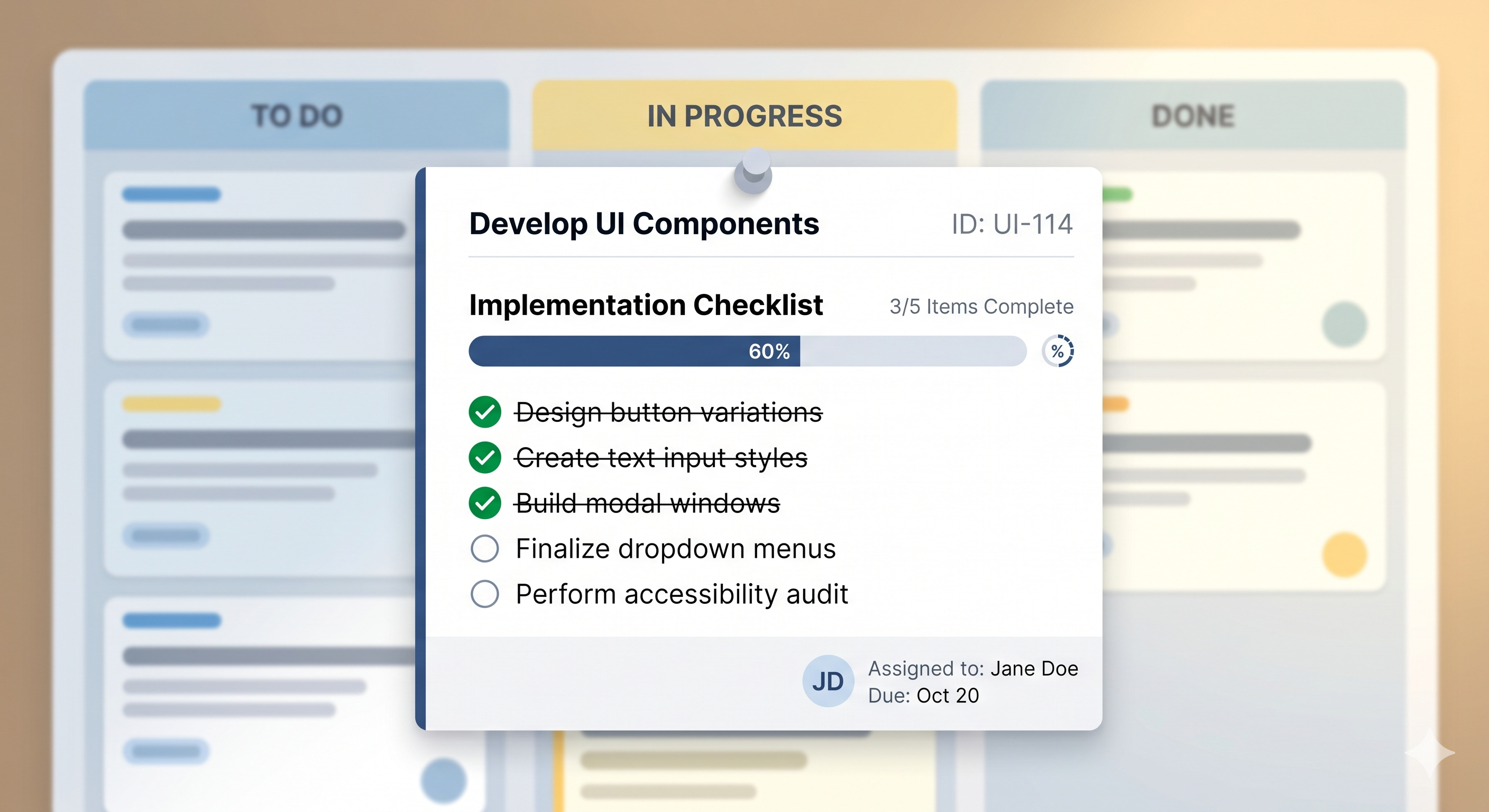
Visualize your work. Put your tasks on a board where you can see them. Columns represent stages. Cards represent tasks. At a glance, you know what's happening.
Limit work in progress. Don't start everything at once. Pick a small number of tasks, focus on them, finish them, then start new ones. This is the principle that makes the biggest difference — and the one most people skip at first.
Manage the flow. Watch how tasks move through your board. Are things getting stuck in one column? That's a bottleneck. Fix it. The goal is smooth, steady movement from left to right.
Keep improving. Kanban isn't something you set up once and forget. Look at your board regularly. Ask yourself what's working, what's slow, and what could be better. Small improvements add up over time.
That's the whole methodology. Four principles. No certifications required.
Why It Works for Almost Anyone
What makes Kanban special is that it doesn't ask you to change how you work. It starts with what you're already doing and makes it visible.
There are no mandatory roles. No required meetings. No fixed time cycles. You take your existing workflow, put it on a board, and start improving from there.
That's why it works for a software team of 20 and a freelancer working alone. The method is the same — only the board looks different.
See It for Yourself
The best way to understand Kanban is to try it. Not read about it — use it.
SimplyKanban gives you a free Kanban board that's ready in 30 seconds. Add your tasks, set priorities, drag cards between columns. See the methodology in action with your own work.
→ Start your free board at simplykanban.online/register
No setup. No complexity. Just the method, working for you.