If you've been reading about project management or task management, you've probably seen these two words a lot: Kanban and Scrum.
Both are popular. Both are used by millions of teams. And both have passionate fans who'll tell you theirs is better.
But which one is actually right for you?
The honest answer: it depends. But don't worry — by the end of this article, you'll know which one fits how you work. No jargon, no fluff, just a simple comparison.
What Is Scrum? (The Short Version)
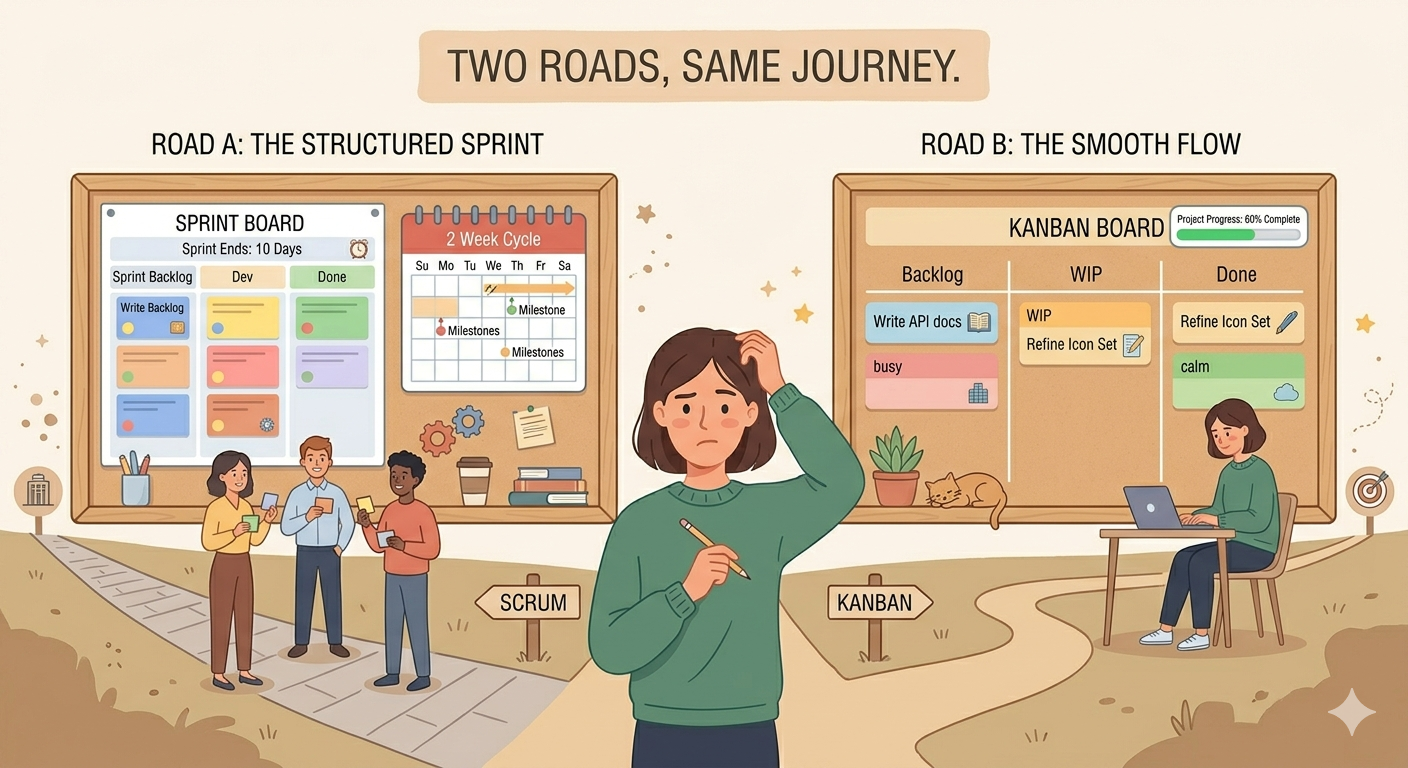
Scrum is a way of working in short bursts called sprints. A sprint usually lasts one to four weeks. At the start, the team picks a set of tasks to complete during that sprint. At the end, they review what got done, what didn't, and plan the next sprint.
There are specific roles — a Scrum Master who keeps things running, a Product Owner who decides priorities, and the team that does the work. There are also regular meetings — daily standups, sprint planning, sprint reviews, and retrospectives.
Scrum is structured. It has rules. And for teams working on complex products with clear deadlines and release cycles, it works really well.
What Is Kanban? (Even Shorter Version)
Kanban is simpler. There are no sprints, no required roles, and no mandatory meetings.
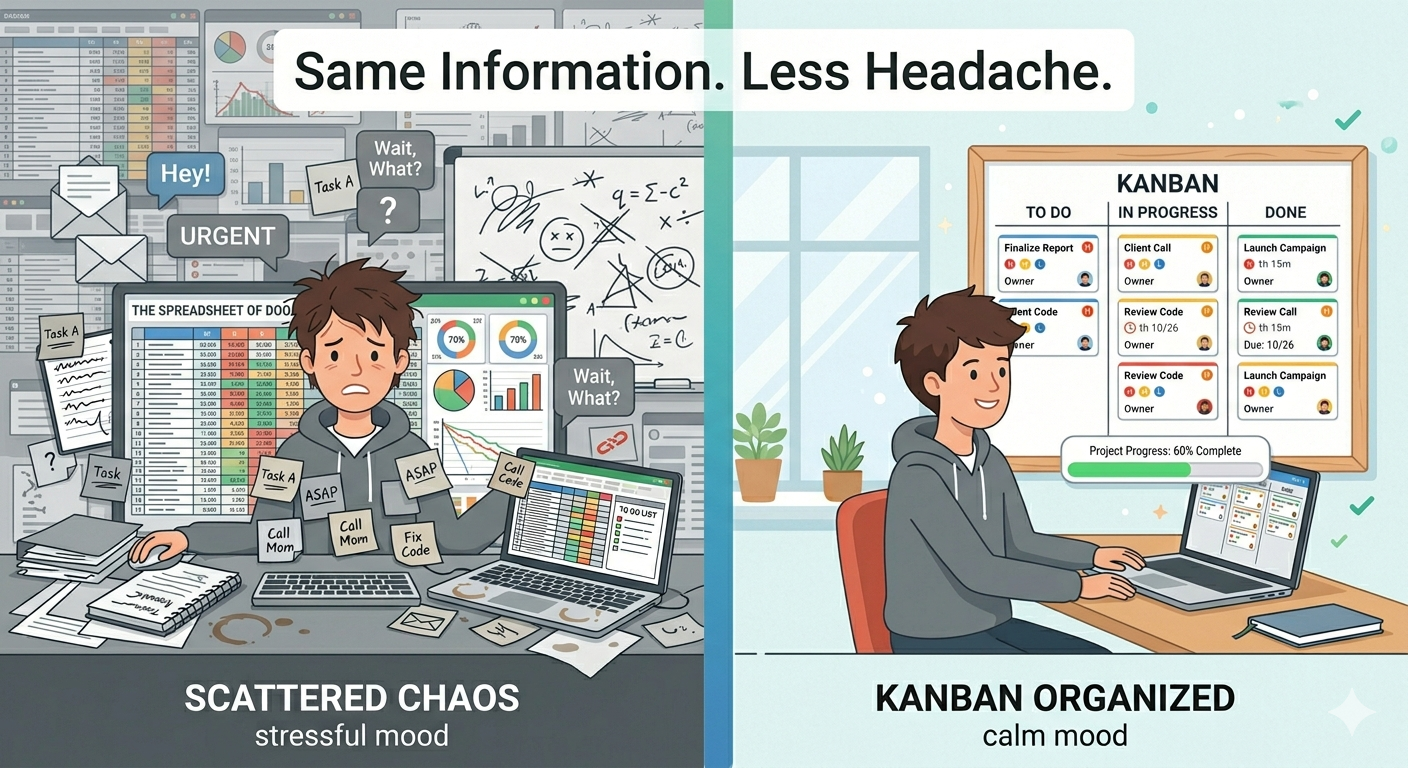
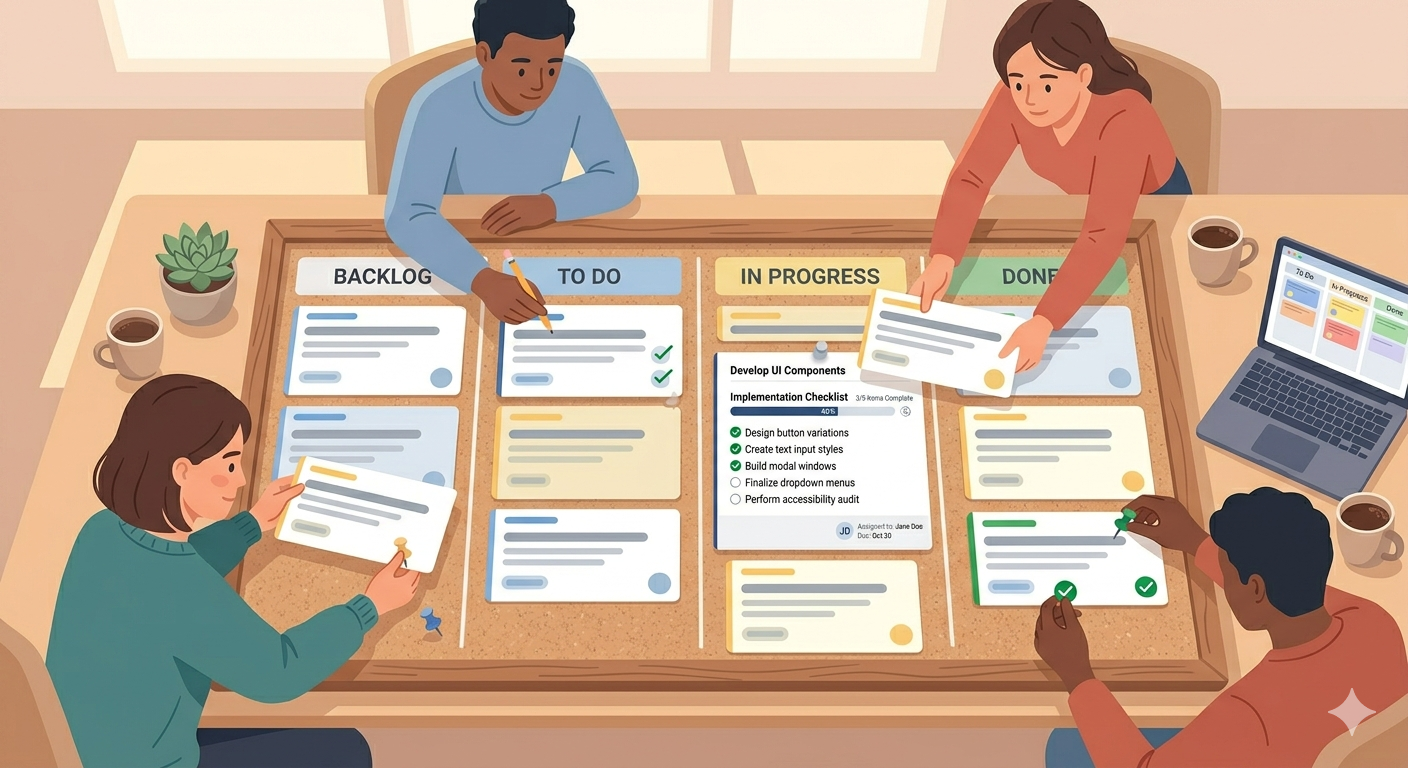
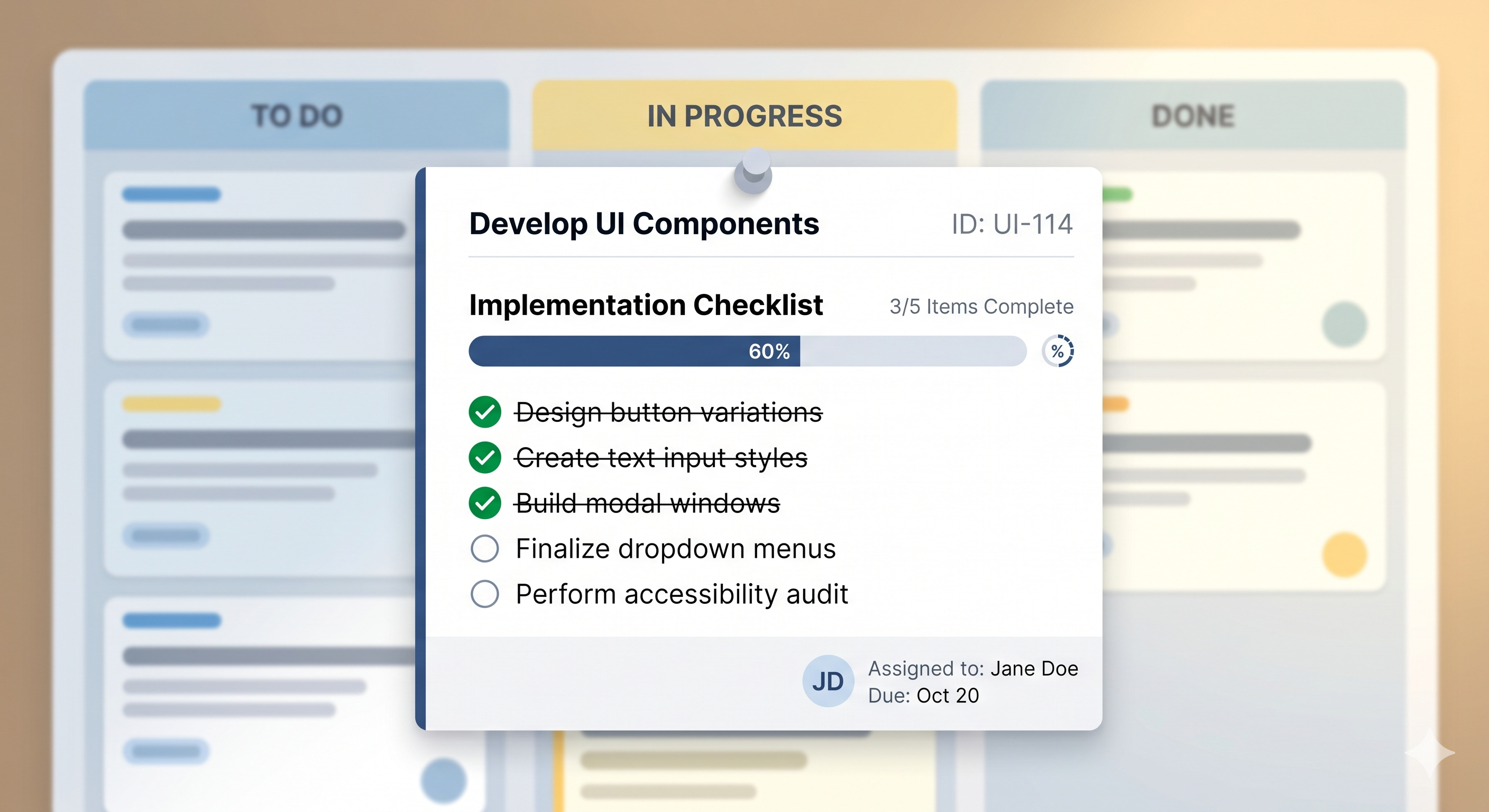
You have a board with columns — To Do, In Progress, Done. Tasks flow through the board continuously. When you finish something, you pull the next task in. There's no start or end date for a cycle — work just keeps moving forward.
The main rules are: make your work visible, limit how many things you work on at once, and keep improving how you do things.
That's Kanban. It's flexible, lightweight, and easy to start.
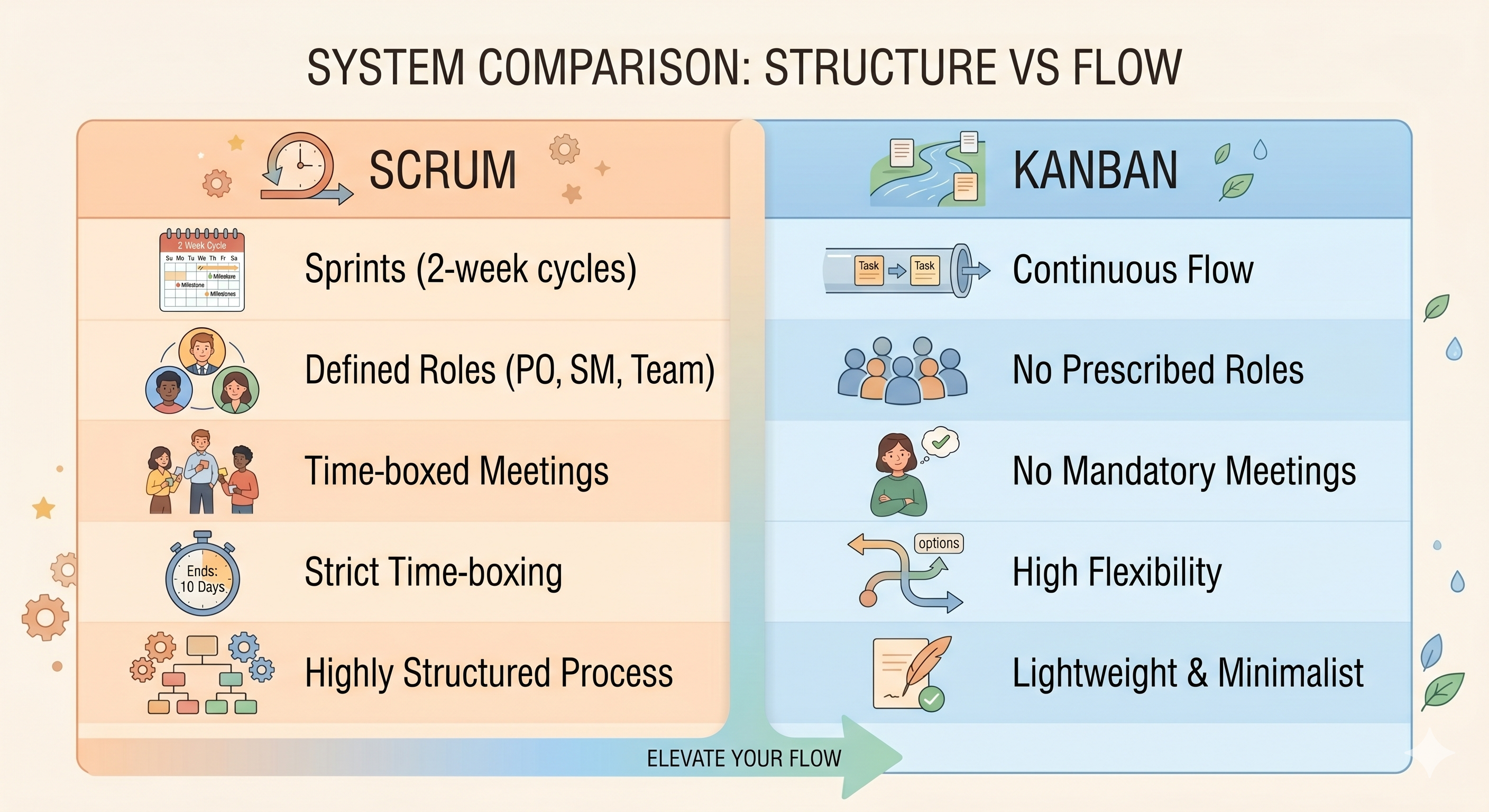
The Real Differences That Matter
Structure — Scrum gives you a framework with clear rules. Kanban gives you a board and lets you decide the rest.
Timing — Scrum works in fixed cycles. Kanban is continuous — tasks flow whenever they're ready.
Roles — Scrum needs a Scrum Master and Product Owner. Kanban doesn't require any specific roles.
Meetings — Scrum has daily standups, sprint planning, reviews, and retros. Kanban has no mandatory meetings — you add them only if they help.
Changes — In Scrum, you usually don't change the sprint backlog once it starts. In Kanban, you can add or rearrange tasks anytime.
Best for — Scrum works well for teams building products in release cycles with clear deadlines. Kanban works well for ongoing work, support tasks, personal projects, freelancing, or any situation where work comes in continuously.
So Which One Should You Pick?
Here's a simple way to think about it:
Choose Scrum if you work in a team that ships products on a schedule, you like structure and clear deadlines, and your team is comfortable with regular meetings and defined roles.
Choose Kanban if you want something simple that works right away, your work doesn't fit into neat two-week cycles, you work alone or in a small team, or you just want to see your tasks and move them forward without extra process.
And honestly? You don't have to pick one forever. Many people start with Kanban because it's easier, and add Scrum practices later if they need more structure. Some teams even mix both — that's sometimes called Scrumban.
The best method is the one that helps you do your work. Not the one with the most rules.
Start with Kanban — It Takes 30 Seconds
If you're not sure where to begin, start with Kanban. It's the lower-risk choice. No setup, no process changes, no learning curve. Just a board, your tasks, and the habit of moving them forward.
SimplyKanban gives you a free Kanban board that's ready the moment you sign up. Add tasks, set priorities, drag cards between columns. Works on any device. No credit card. No trial.
→ Start your free board at simplykanban.online/register
Try it for a week. If you love it — great, you've found your system. If you want more structure later, you can always add it. But at least your tasks will be organized from day one.