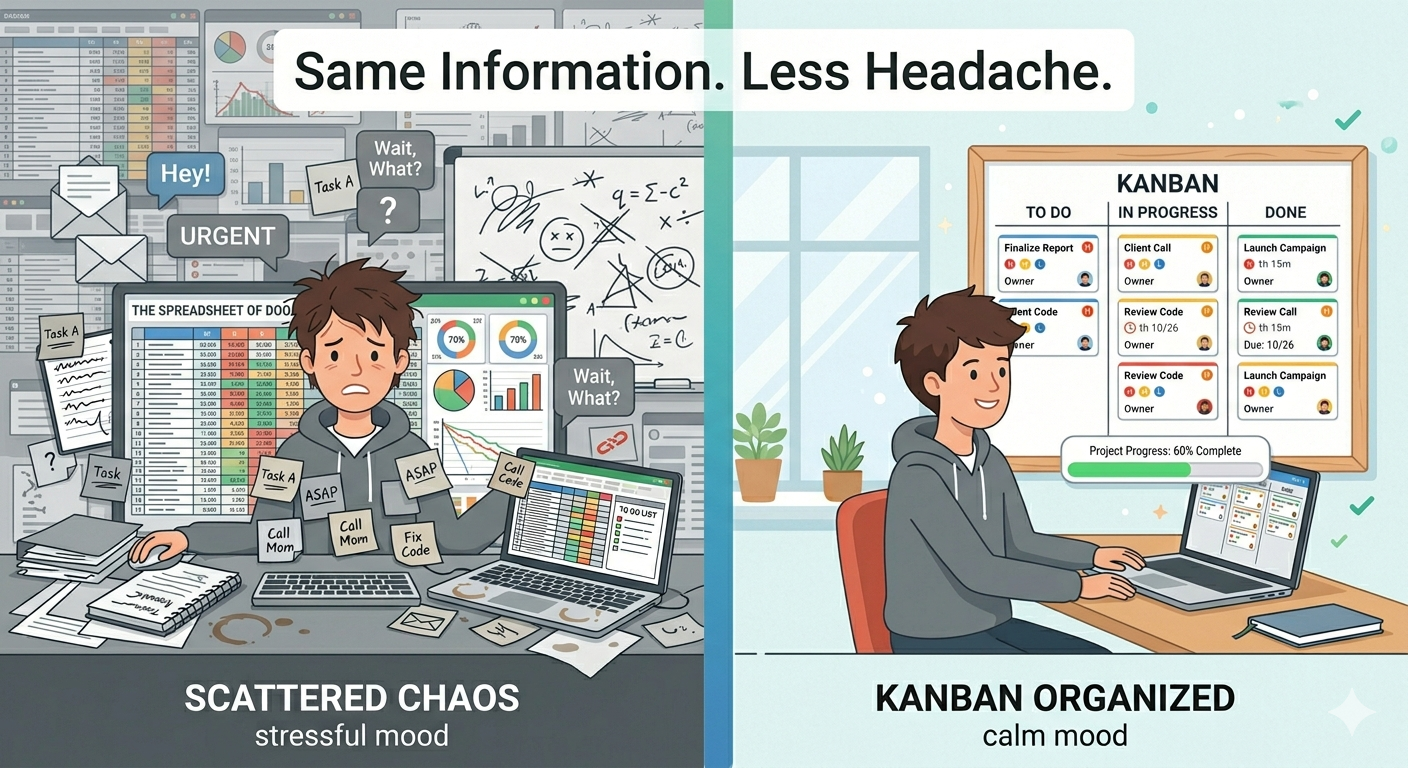
Your Online Kanban Board Is the Only Project Management Dashboard You Need
You don't need a fancy dashboard to know where your project stands. A simple Kanban board shows you everything at a glance — no charts, no reports, no guesswork.
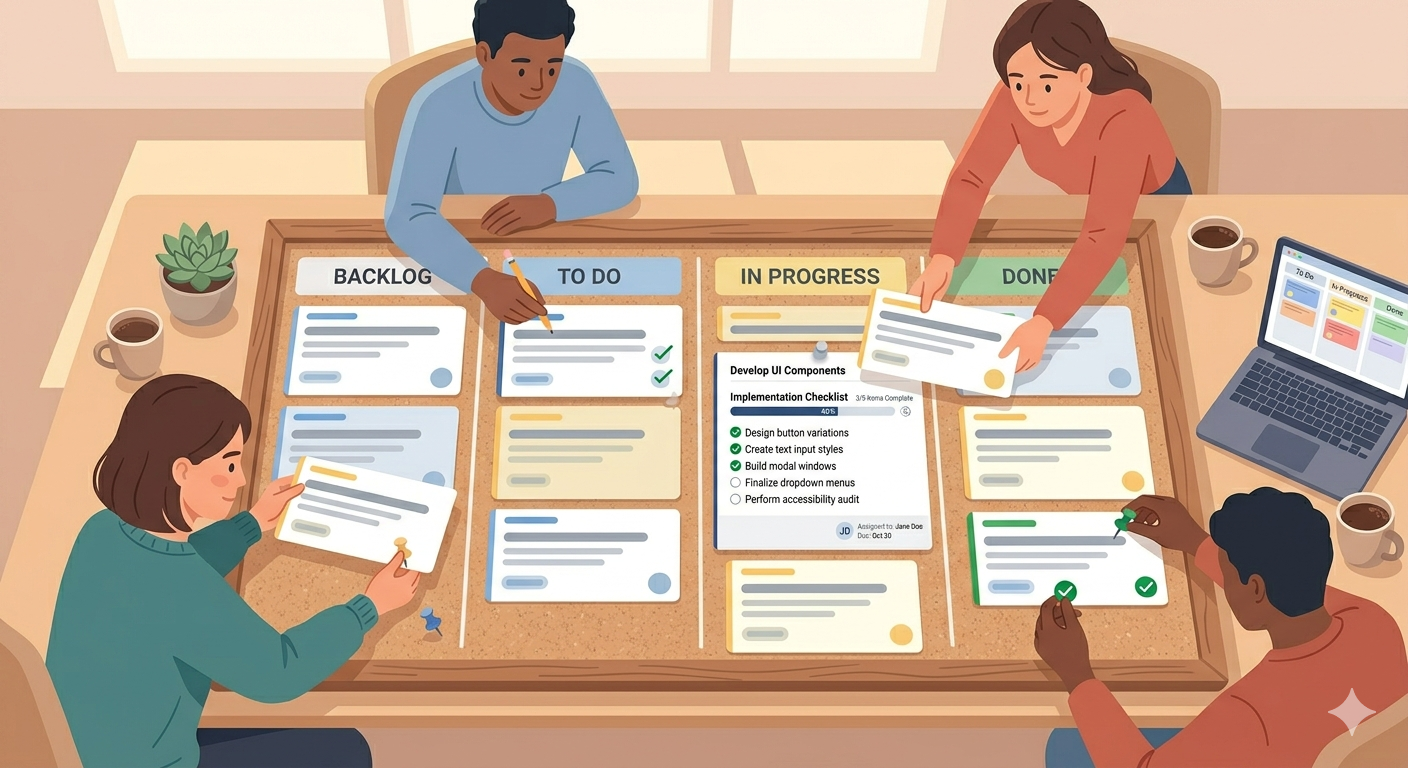
What Is Work Management? A Simple Guide for Teams That Want to Get More Done
Work management is how teams plan, execute, and improve their work. Here's what it really means — and why a simple Kanban board is all most teams need to do it well.
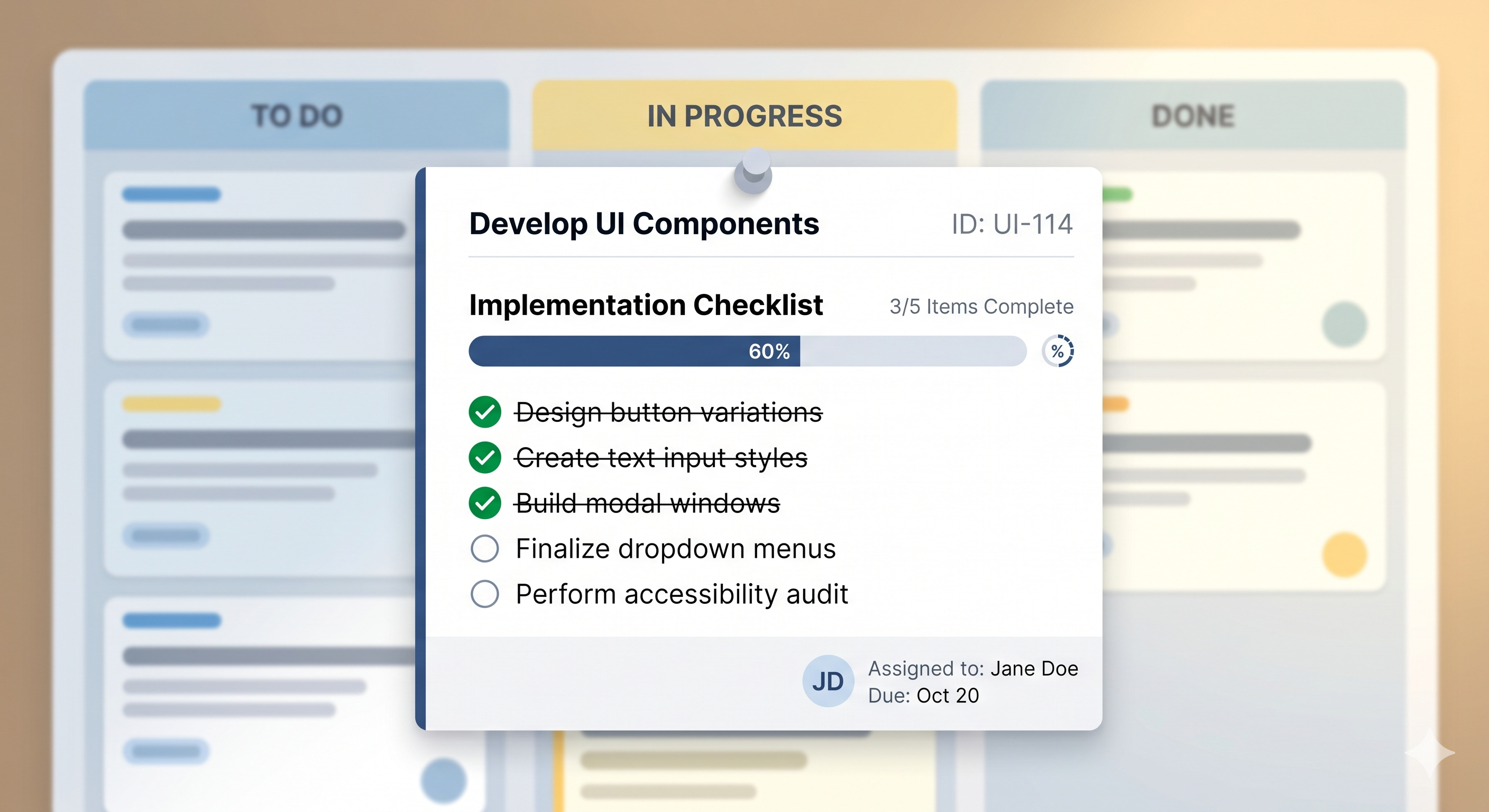
Checklists Inside Your Kanban Cards: The Simplest Way to Break Down Any Task
Big tasks are easier when you break them into steps. Simply Kanban's built-in checklists let you do exactly that - right inside your Kanban cards. Here's how it works.

How Marketing Teams Use Kanban Boards to Ship Campaigns Faster
Marketing teams juggle campaigns, content, social, and emails all at once. Here's how five simple Kanban board setups help them ship faster without the chaos.
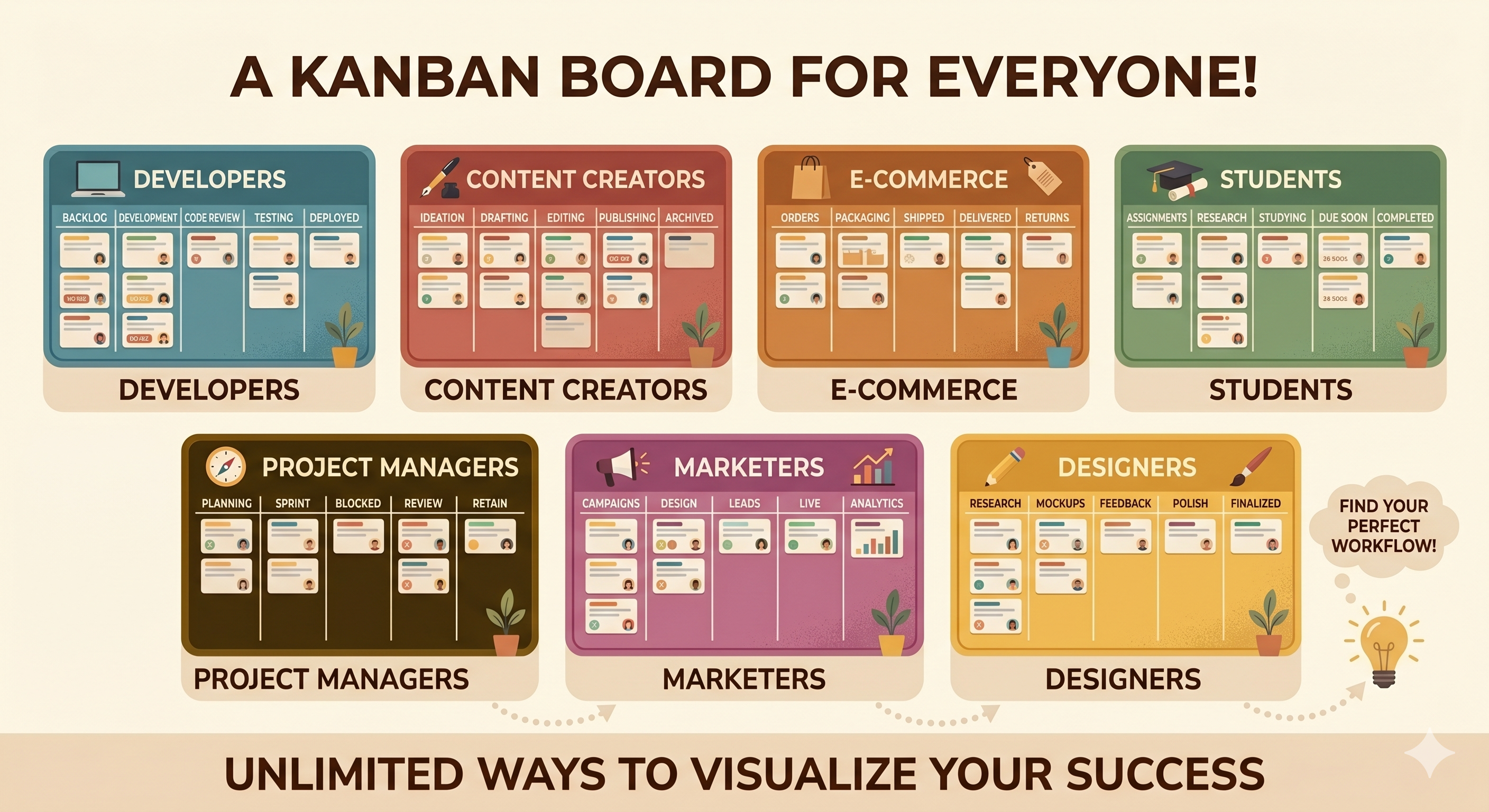
7 Kanban Board Examples You Can Copy and Use Right Now
Not sure how to set up your Kanban board? Here are seven real examples for freelancers, developers, students, small businesses, and more — ready to copy and use.
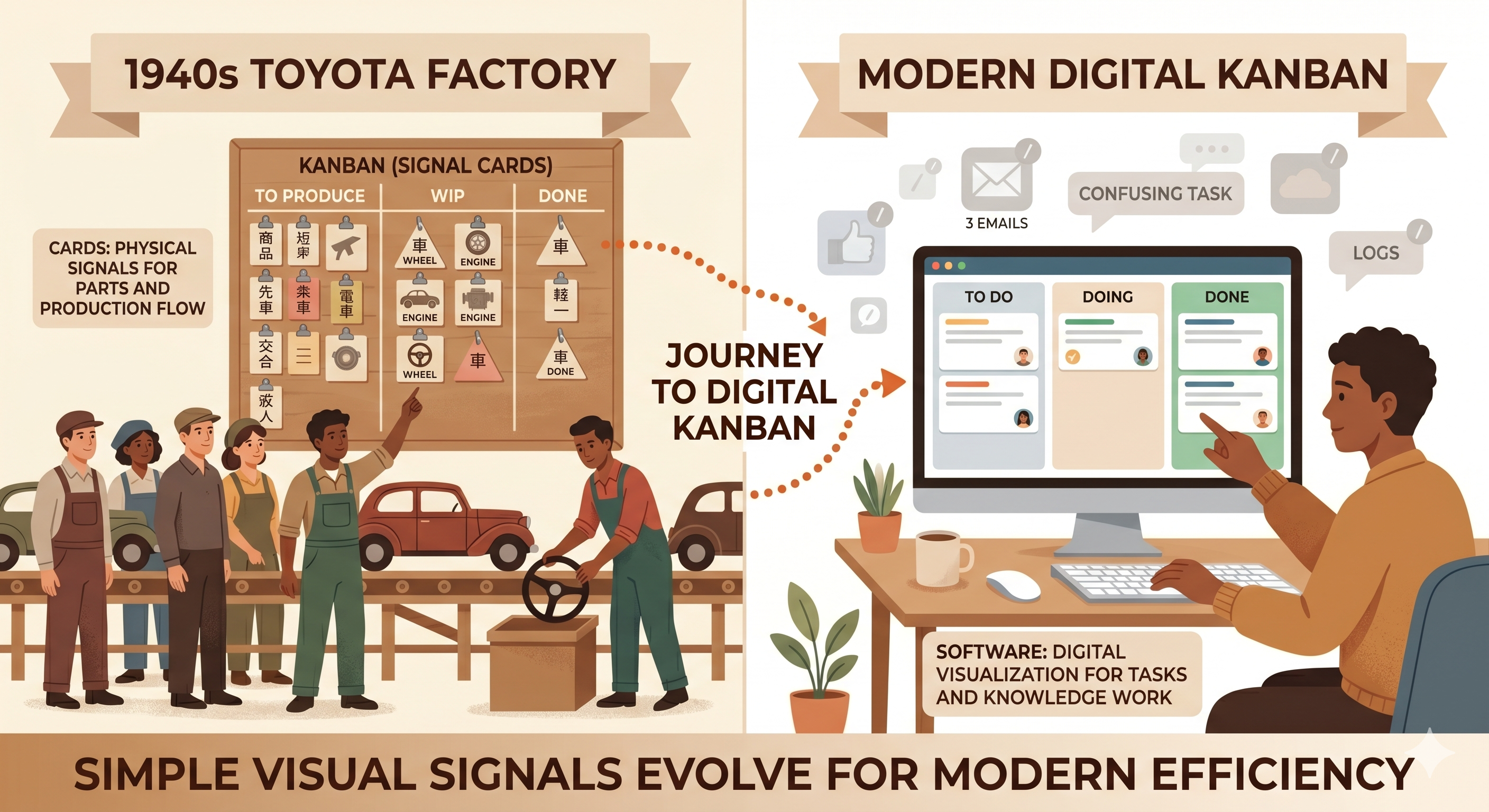
What Is Kanban in Project Management? The Methodology Explained Simply
Kanban started in a Toyota factory in the 1940s. Today it's one of the most popular project management methods in the world. Here's what it is and why it works.
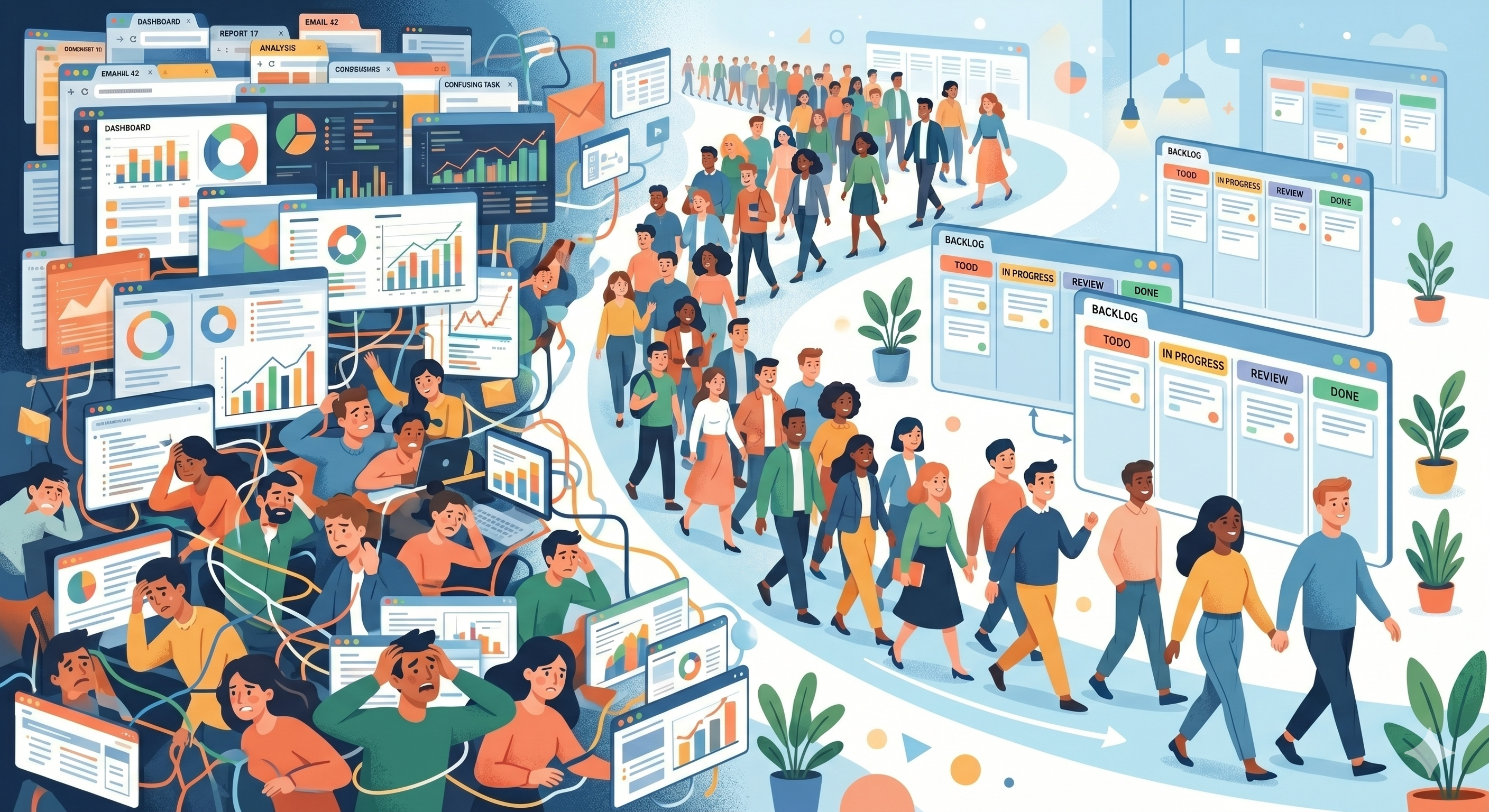
Why More People Are Switching to Kanban in 2026
Complicated tools are losing users in 2026. More people are switching to simple Kanban boards — and the reasons say a lot about how work is changing.
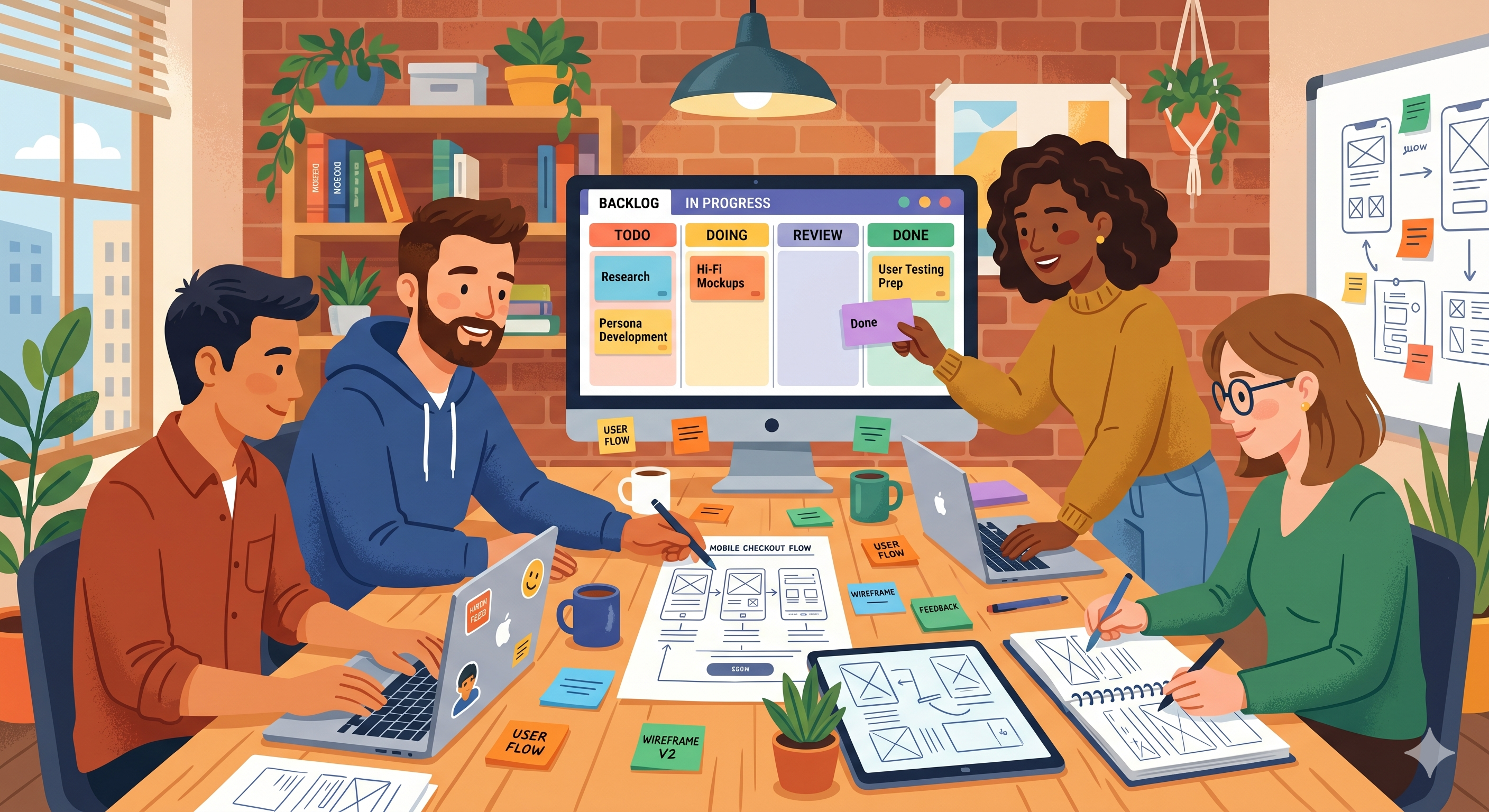
5 Ways UX Teams Use Kanban Boards to Design Better Products
UX design has a lot of moving parts. Here are five practical ways UX teams use Kanban boards to track work, manage feedback, and ship better products.
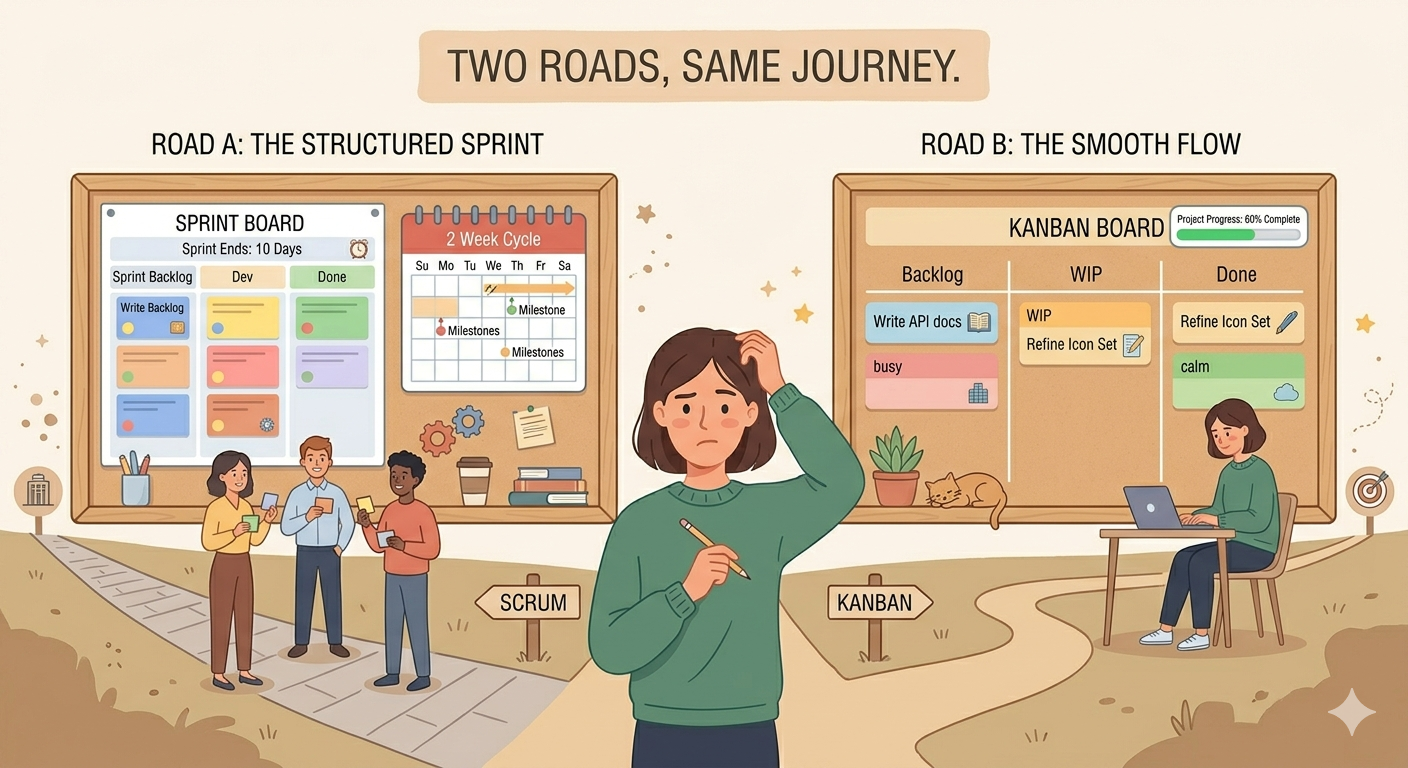
Kanban vs Scrum: Which One Is Right for You? (A Simple, Honest Answer)
Kanban and Scrum are both popular — but they work very differently. Here's a simple, no-jargon comparison to help you pick the one that fits how you work.
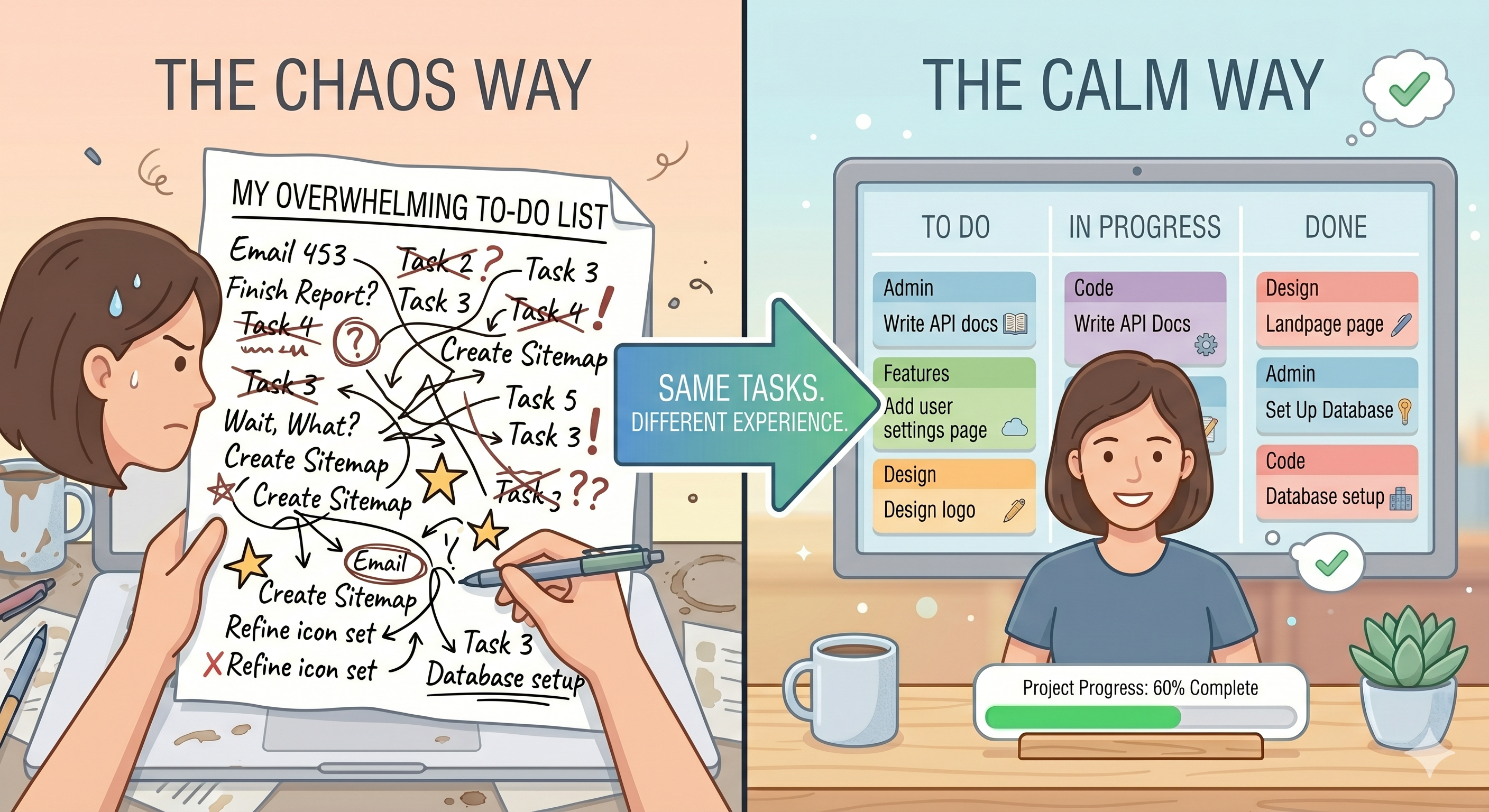
How to Actually Finish Your To-Do List (Hint: Make It Visual)
Your to-do list keeps growing but never shrinks. The fix isn't working harder — it's making your tasks visual so they actually move forward.
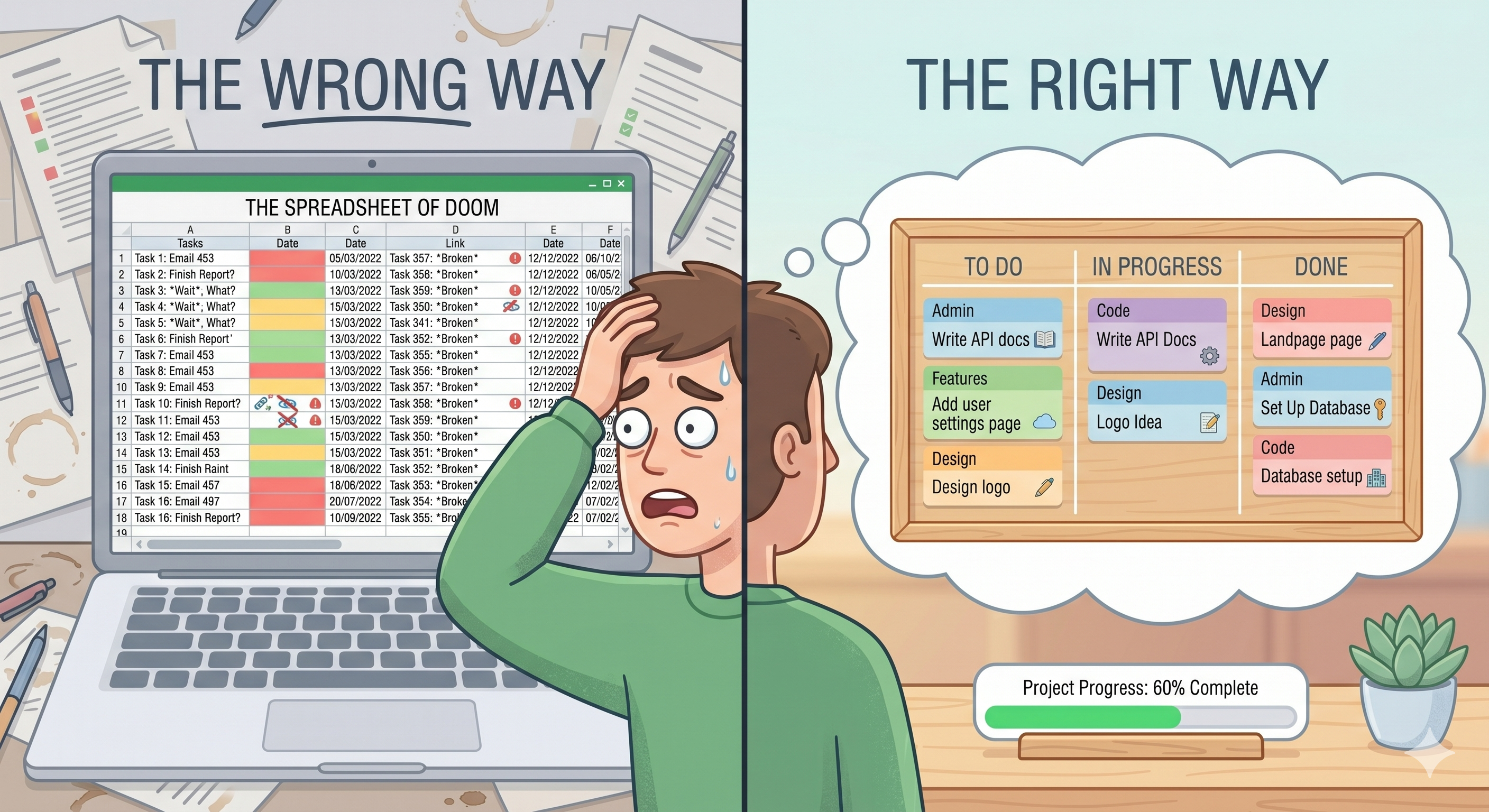
Stop Using Spreadsheets as a Task Manager. There's a Better Way.
Spreadsheets are great for numbers — not for managing tasks. If your to-do list lives in row 147, it's time to try something that actually moves.
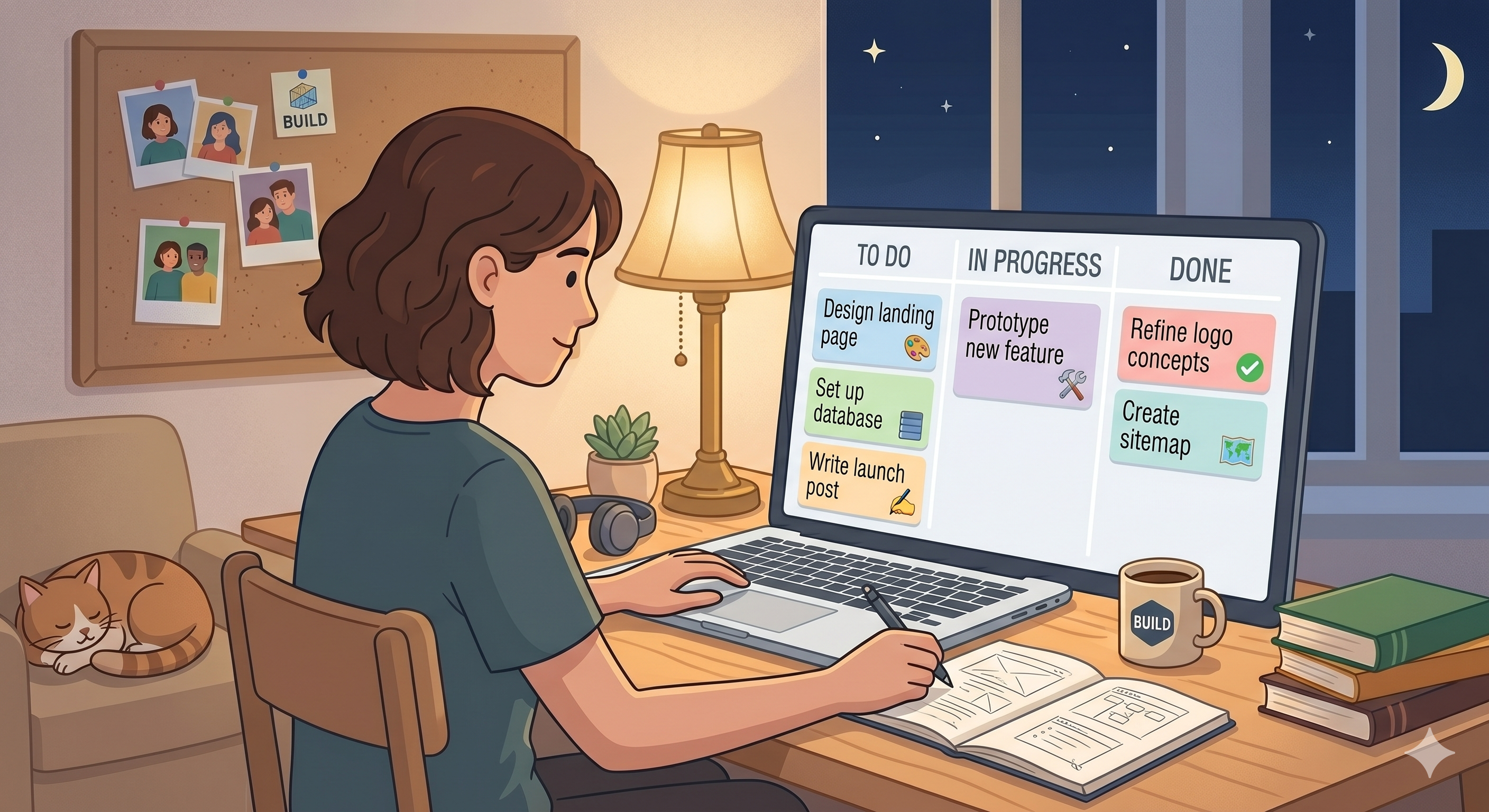
Building a Side Project? A Kanban Board Keeps You Moving Forward
Side projects die when momentum dies. A Kanban board keeps track of where you left off, what's next, and how far you've come — so every session counts.

How Students Use Kanban Boards to Survive Deadlines (and Actually Enjoy It)
Assignments, exams, group projects — university is a lot. A Kanban board helps you see everything in one place, hit your deadlines, and stress less.
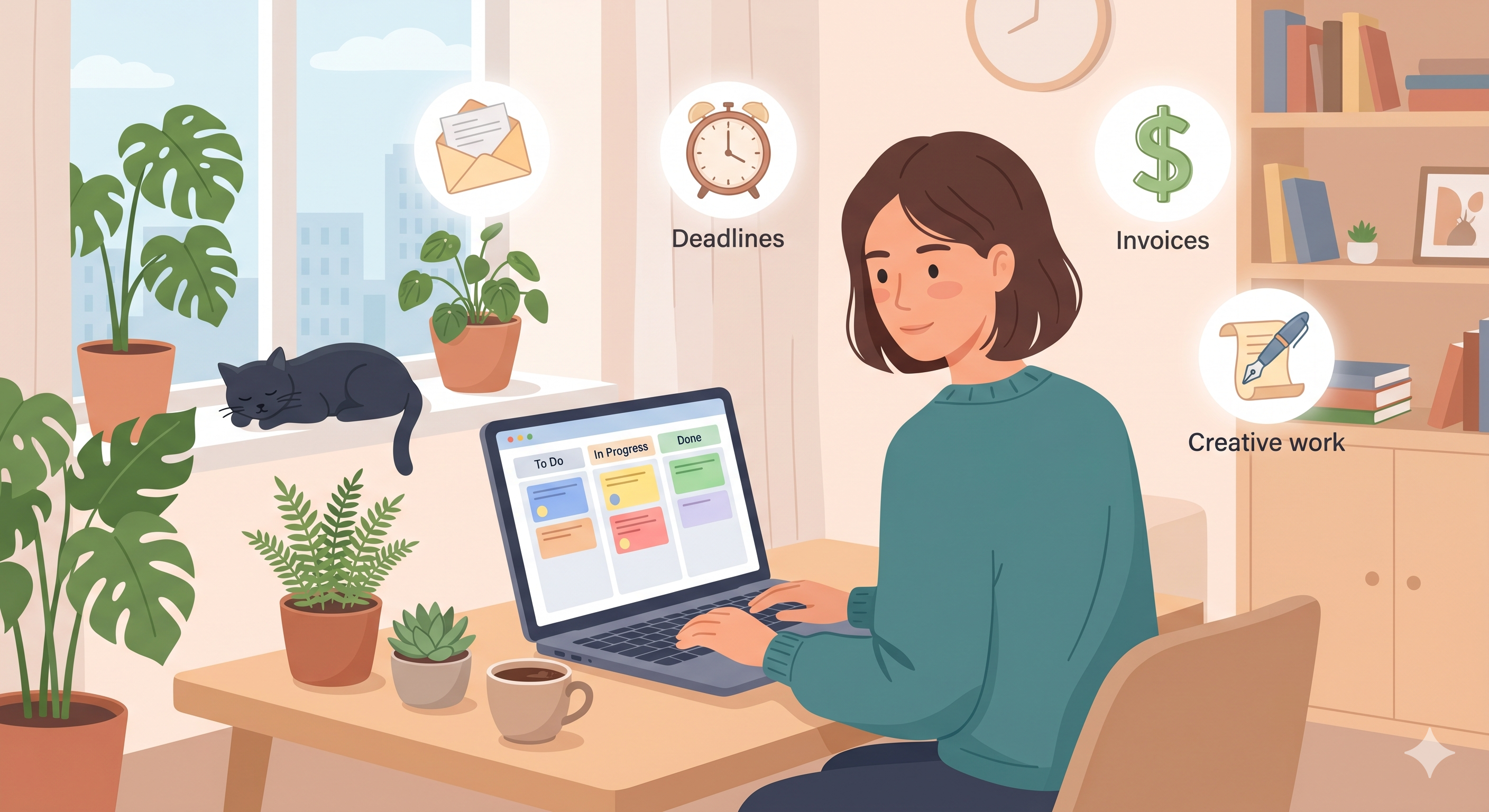
How Freelancers Use Kanban Boards to Stay on Top of Everything
Freelancing means doing everything yourself. A Kanban board puts all your tasks, deadlines, and client work in one place — so nothing falls through the cracks.
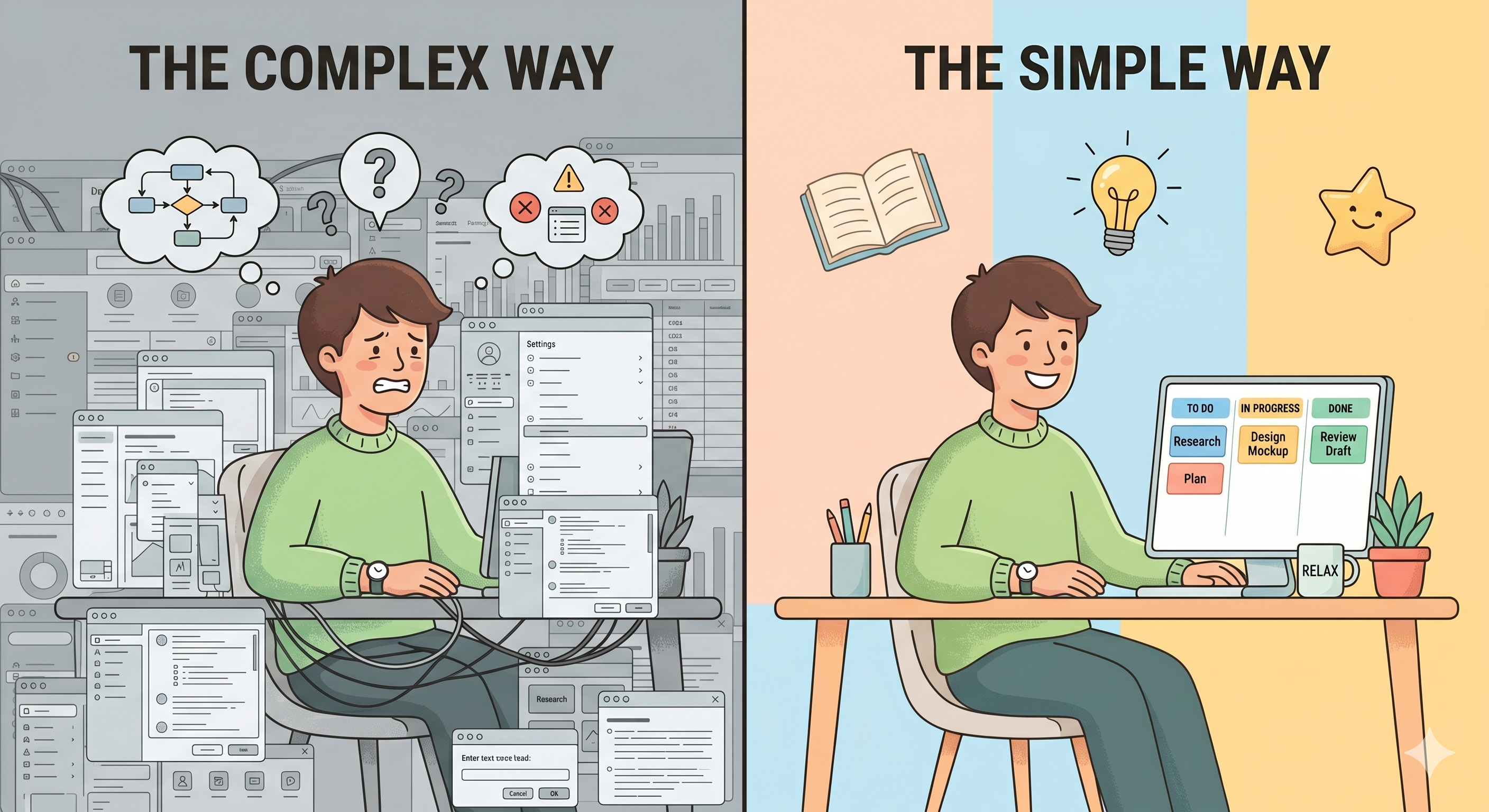
You Don't Need Jira. You Need a Kanban Board.
Jira is great for big teams. But if you just need to track your tasks without the complexity, a simple Kanban board is probably a better fit.

Kanban for Beginners: How to Start Managing Your Tasks in 60 Seconds
Kanban sounds complicated but it's not. Three columns, a few cards, and 60 seconds — that's all you need to start managing your tasks like a pro.
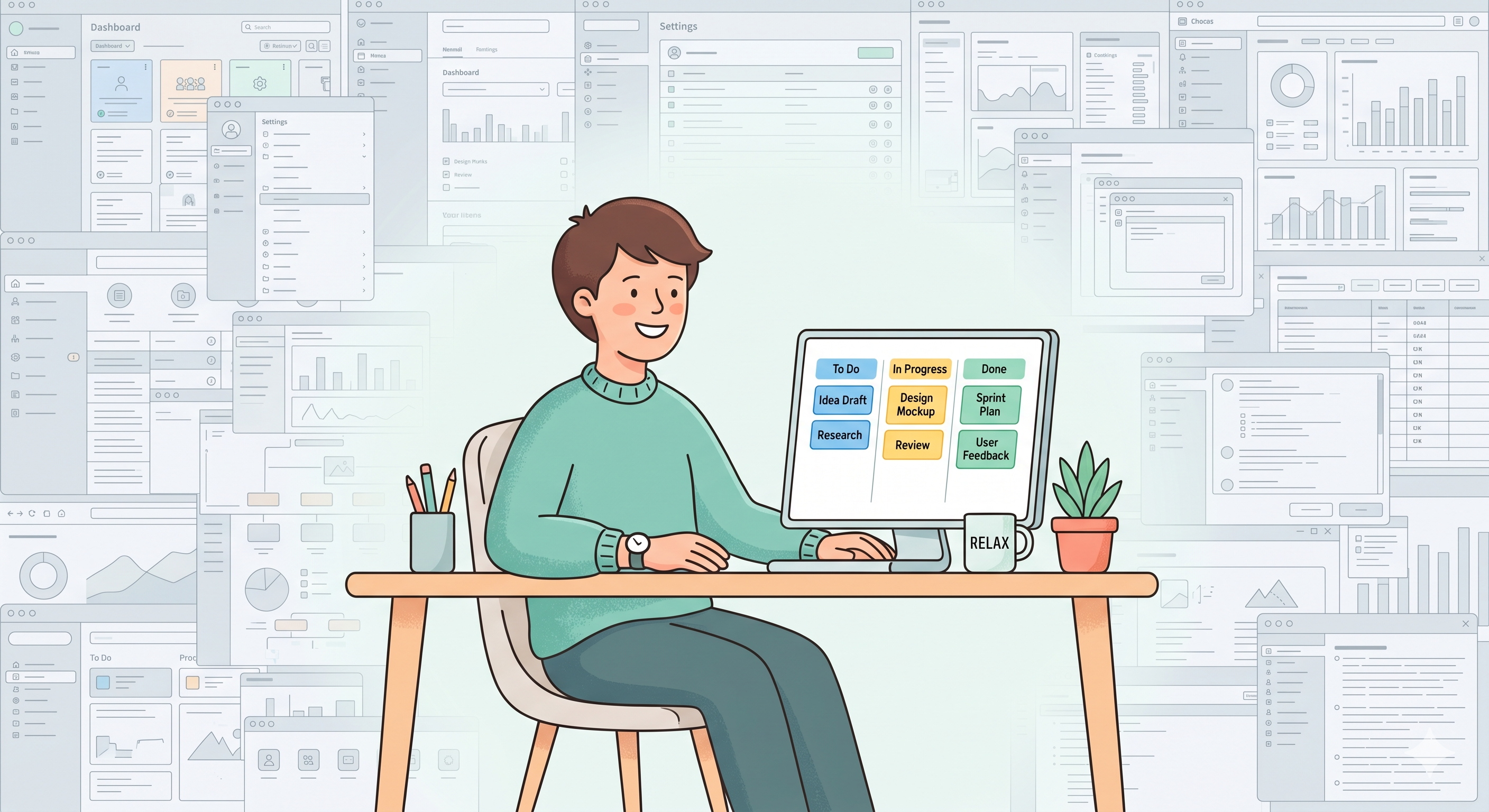
Tired of Complicated Project Management Tools? Try a Simple Kanban Board Instead.
Most project management tools are built for big teams — not for people who just want to get things done. Here's why a simple Kanban board might be all you need.