You've probably heard the term "work management" thrown around. It sounds like one of those business buzzwords that means everything and nothing at the same time.
But it's actually a simple idea. Work management is how a team — or even a single person — plans what needs to be done, does it, and keeps improving how they do it.
That's it. No MBA required.
The problem is that most people don't have a system for this. They rely on memory, scattered messages, or that one spreadsheet nobody wants to open. And when work grows, things start falling apart.
Let's break down what work management actually means — and why a simple Kanban board might be the only tool you need to do it well.
The Three Parts of Work Management
Every type of work — whether you're a startup, a small agency, or a one-person business — follows the same basic cycle:
Plan it. Figure out what needs to happen, who's doing it, and when it's due. This is where most teams already struggle — not because the work is hard, but because it lives in too many places. Some tasks are in email, some in chat, some in someone's head.
Do it. Actually work through the tasks, step by step, while keeping track of what's in progress and what's done. This sounds obvious, but without visibility, people duplicate work, miss deadlines, or forget things entirely.
Improve it. Look back at how the work went. What got stuck? What took too long? What could be smoother next time? This is the part almost everyone skips — but it's the part that makes teams get faster over time.
That cycle — plan, do, improve — is work management. And it applies whether you're running a 50-person department or managing your own freelance clients.
Why Most Teams Struggle With It
Not because they're bad at their jobs. Because they don't have one clear place to see their work.
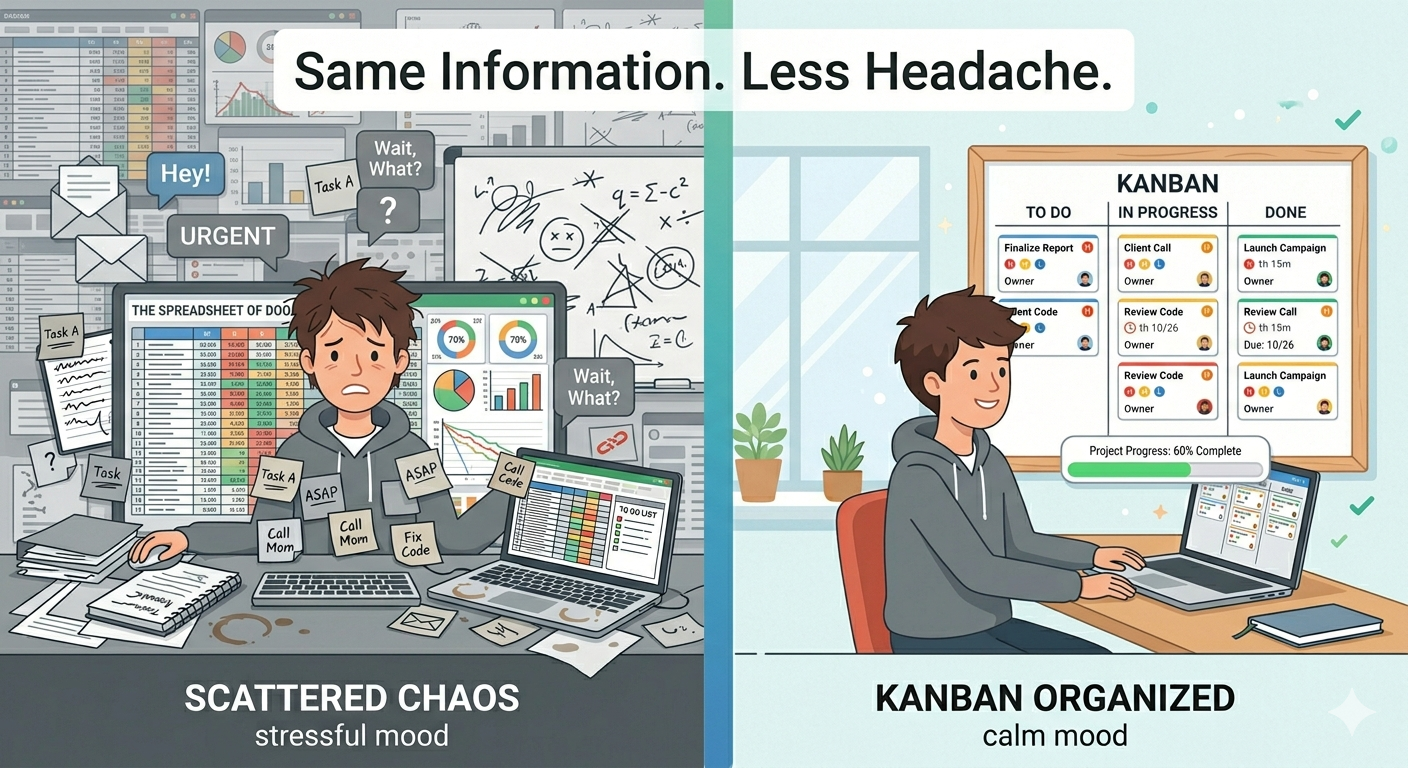
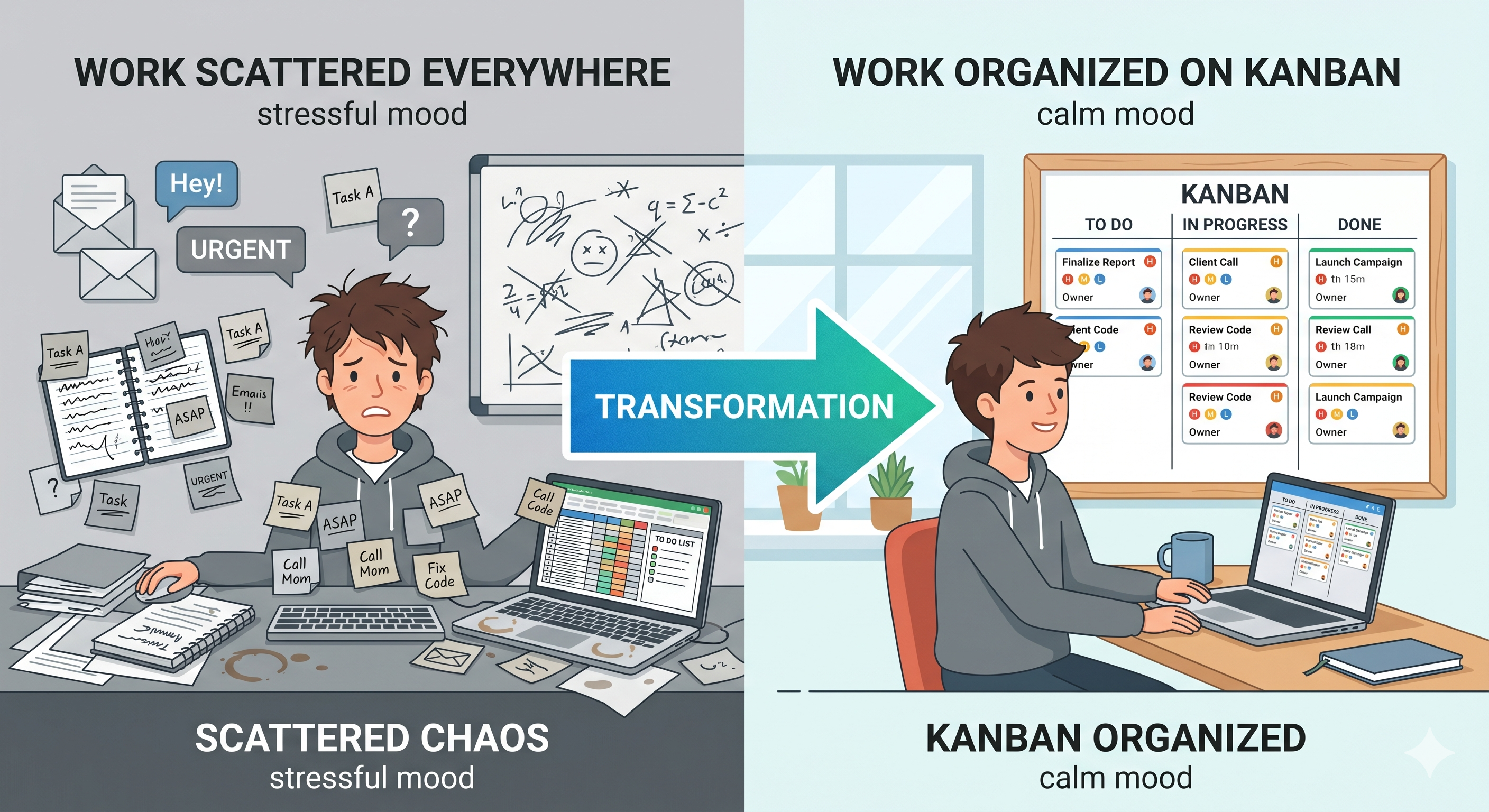
Tasks are spread across emails, Slack messages, spreadsheets, sticky notes, and meeting notes. Everyone has a different system — or no system at all. The manager thinks the project is on track. The designer thinks they're waiting for feedback. The developer didn't know the task existed.
This happens everywhere. And it gets worse as the team grows.
The fix isn't buying a massive project management platform with a hundred features. The fix is making work visible. When everyone can see what's planned, what's happening, and what's done — most of these problems disappear on their own.
How a Kanban Board Covers All Three Steps
A simple Kanban board handles the whole work management cycle without overcomplicating it.
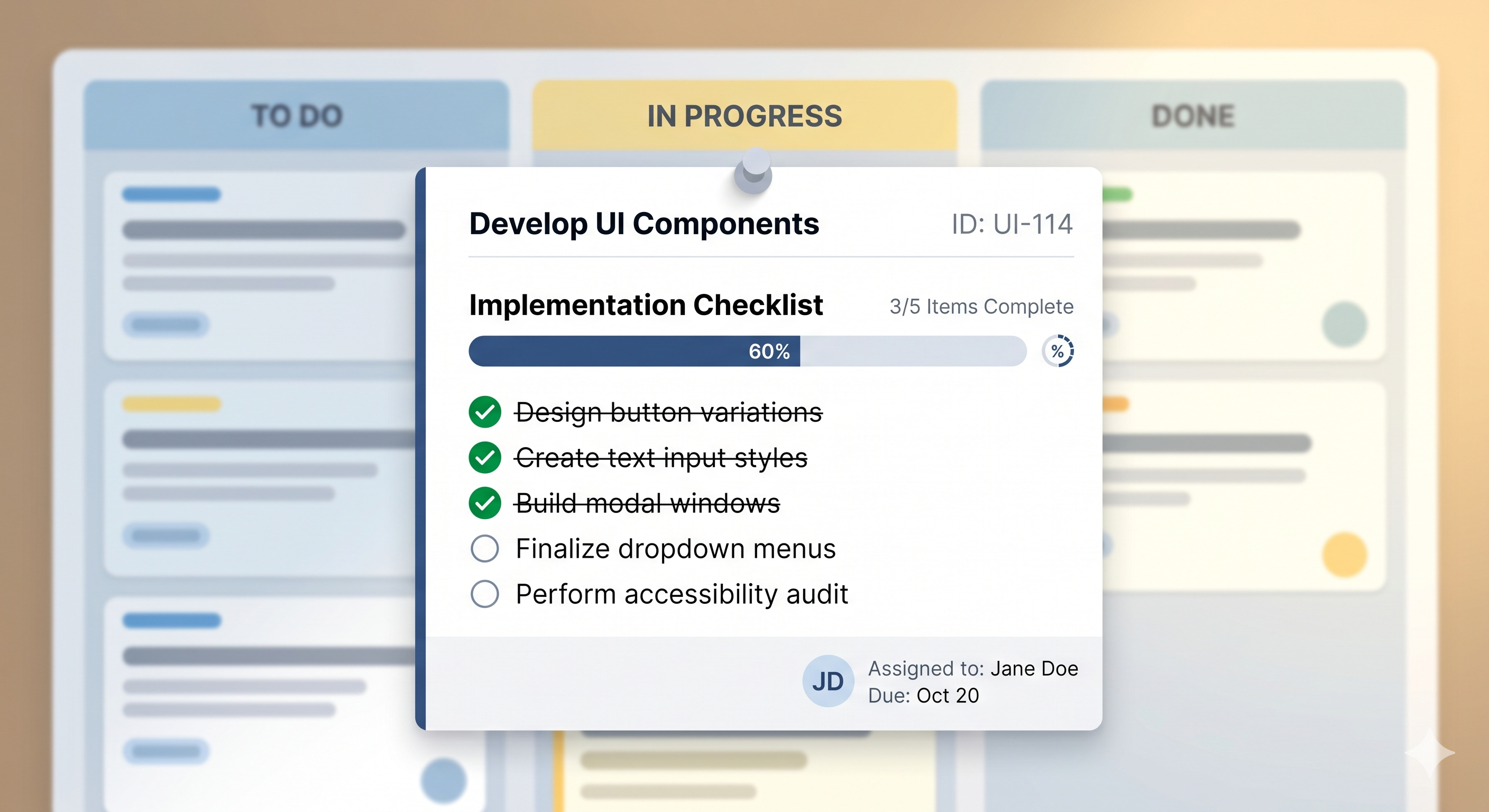
Planning — you add all your tasks to the board. Set priorities. Add deadlines. Now everything lives in one place and everyone can see what's coming.
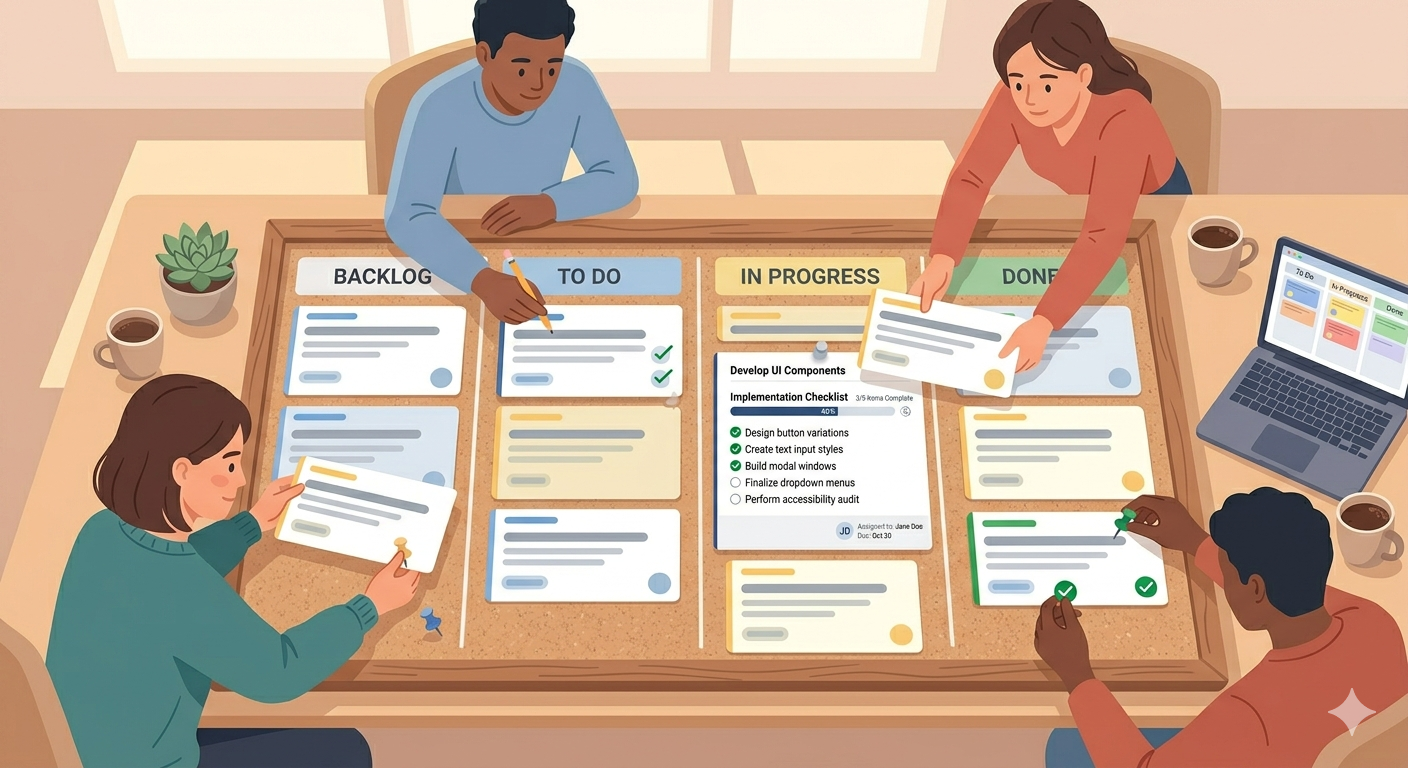
Doing — you move cards from To Do to In Progress to Done. The board shows what's active, what's stuck, and what's finished. No status meetings needed — the board is the status meeting.
Improving — after a week or two, patterns show up. You notice which column things get stuck in. You see which tasks always take longer than expected. That's your signal to adjust. Move a step, add a column, change a priority. The board evolves with your team.
That's work management — without the enterprise price tag.
Why SimplyKanban Fits This Perfectly
A lot of work management tools try to be everything. They add timelines, resource planning, reporting dashboards, automations, integrations — and suddenly you need a training session just to create a task.
SimplyKanban takes a different approach. It gives you an online Kanban board that's ready the moment you sign up. Add tasks, set priorities, add deadlines, drag cards between columns. That's your whole work management system.
It works for a team of five or a team of one. On your laptop or on your phone. And it's free — no credit card, no trial, no feature walls.
→ Create your free board at simplykanban.online/register
Not sure yet? Try the demo first — create tasks, move cards, build columns. No signup needed.
→ See it in action at simplykanban.online/demo
Keep It Simple. Keep It Moving.
Work management doesn't need to be complicated. Plan your work, see your work, improve how you do your work.
A simple Kanban board does all three — and nothing more.
Sometimes that's exactly enough.
What Is Work Management? A Simple Guide for Teams That Want to Get More Done