Let's get one thing out of the way: Jira is a good tool. It's built for big teams, complex software projects, and workflows with dozens of moving parts.
But here's the thing — most people don't have dozens of moving parts. Most people have a list of tasks and want a simple way to track them.
If you've ever opened Jira and thought "this is way too much for what I need" — you're not wrong. And you're definitely not alone.
The Problem Isn't You. It's the Tool
Jira was made for large development teams. Sprints, epics, story points, backlogs, workflows, permission schemes — it's built to handle serious complexity. And for that purpose, it does a great job.
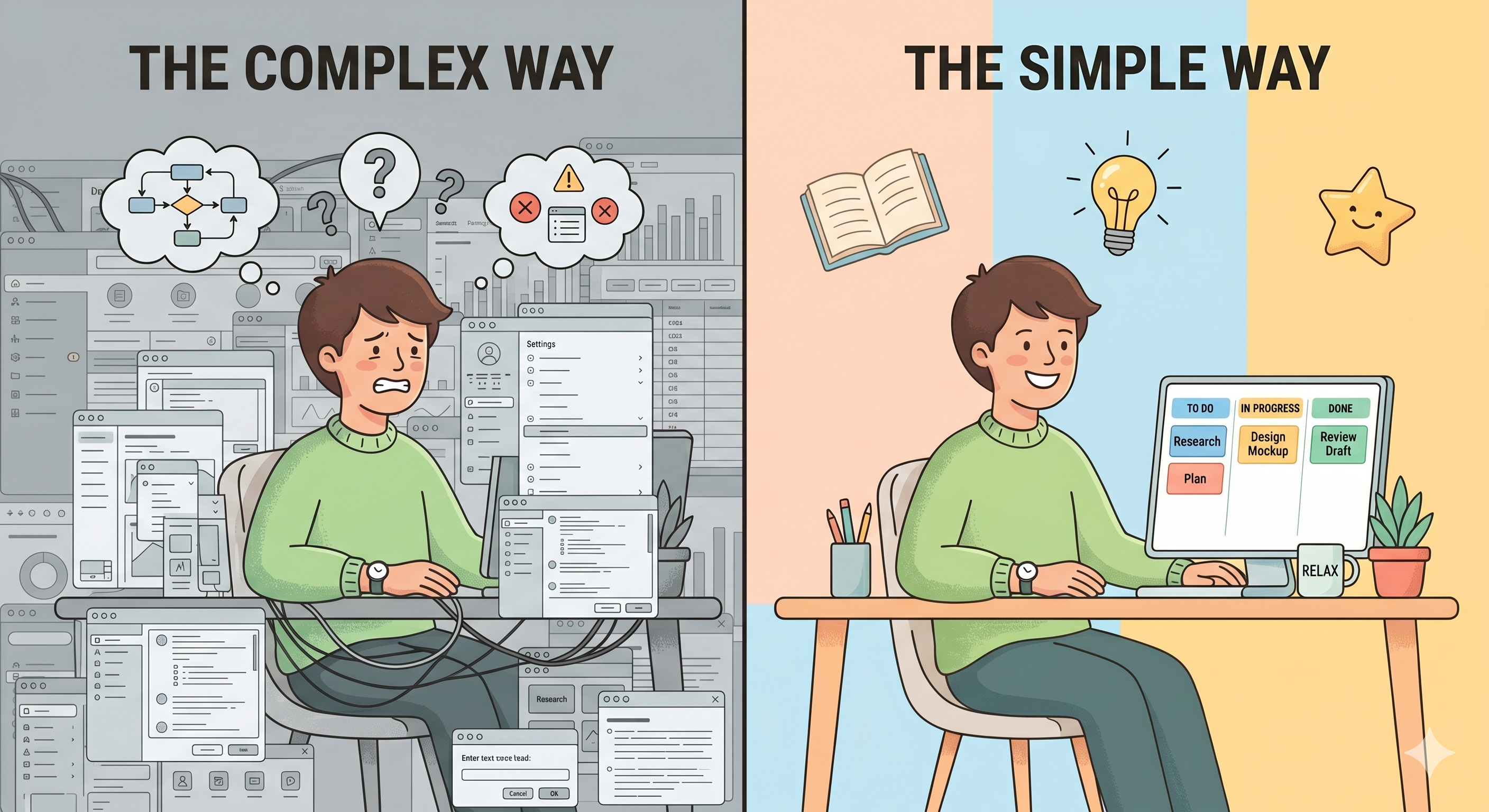
But somewhere along the way, people started using Jira for everything. Managing a blog calendar. Tracking personal tasks. Running a three-person team. And suddenly, a tool designed for 50-person engineering departments is being used by someone who just wants to remember to send an invoice.
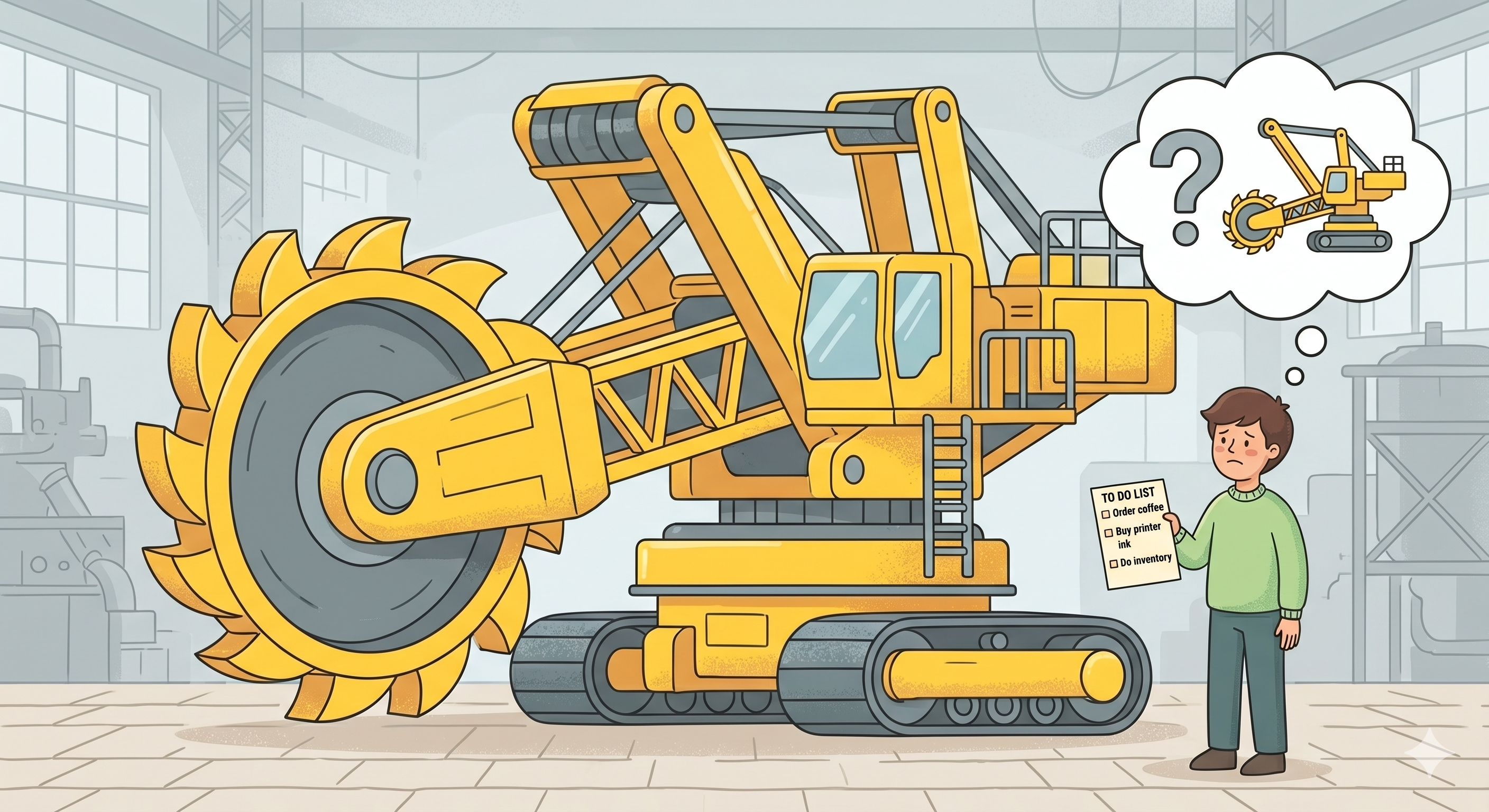
That's like using a tractor to go grocery shopping. It works, technically. But it's not fun.
If your needs are simple, your tool should be simple too.
What Do You Actually Need?
Think about it. If you strip away all the features you never use, what do you really need from a task management tool?
A way to see all your tasks in one place. A way to know what's in progress and what's done. A way to mark what's urgent. Maybe a deadline here and there. And it should work on your phone too, because you're not always at your desk.
That's it. That's the list.
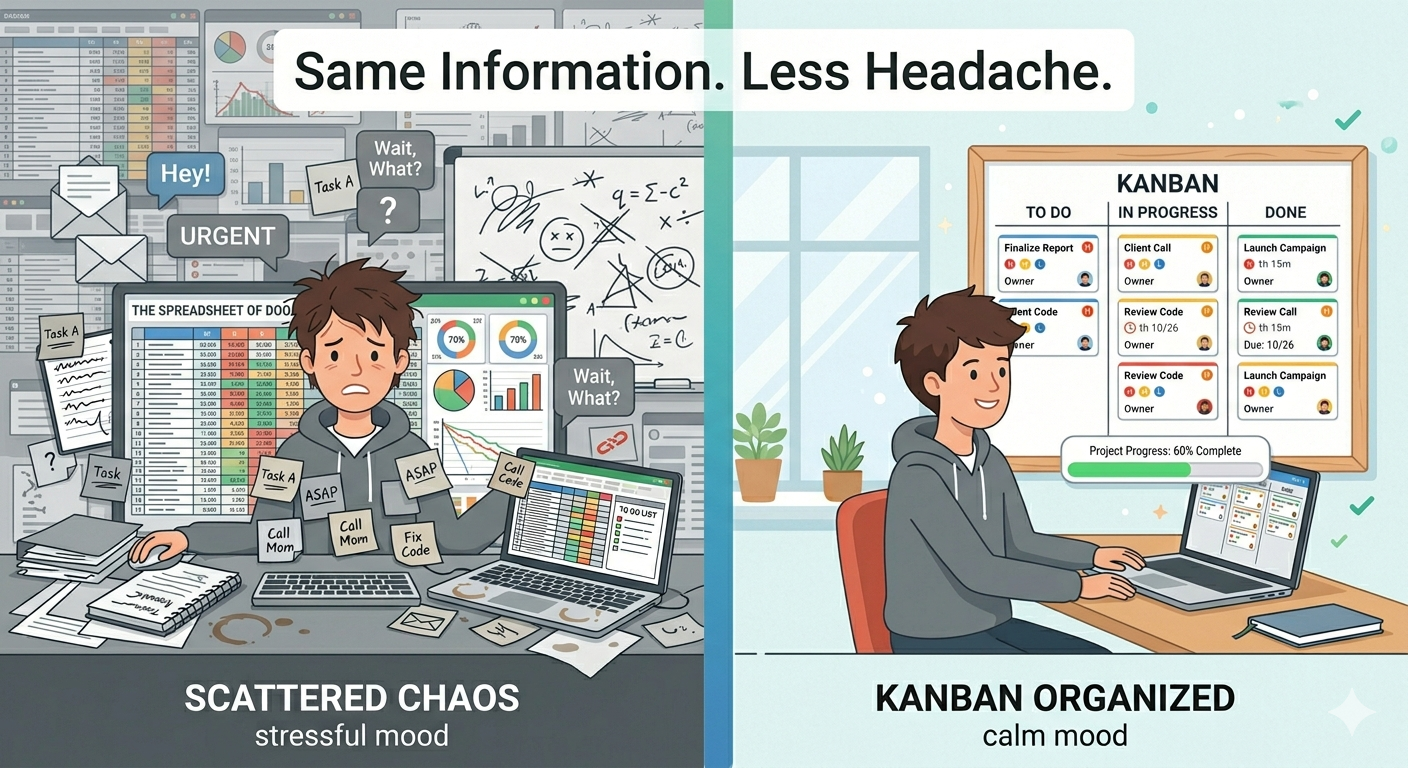
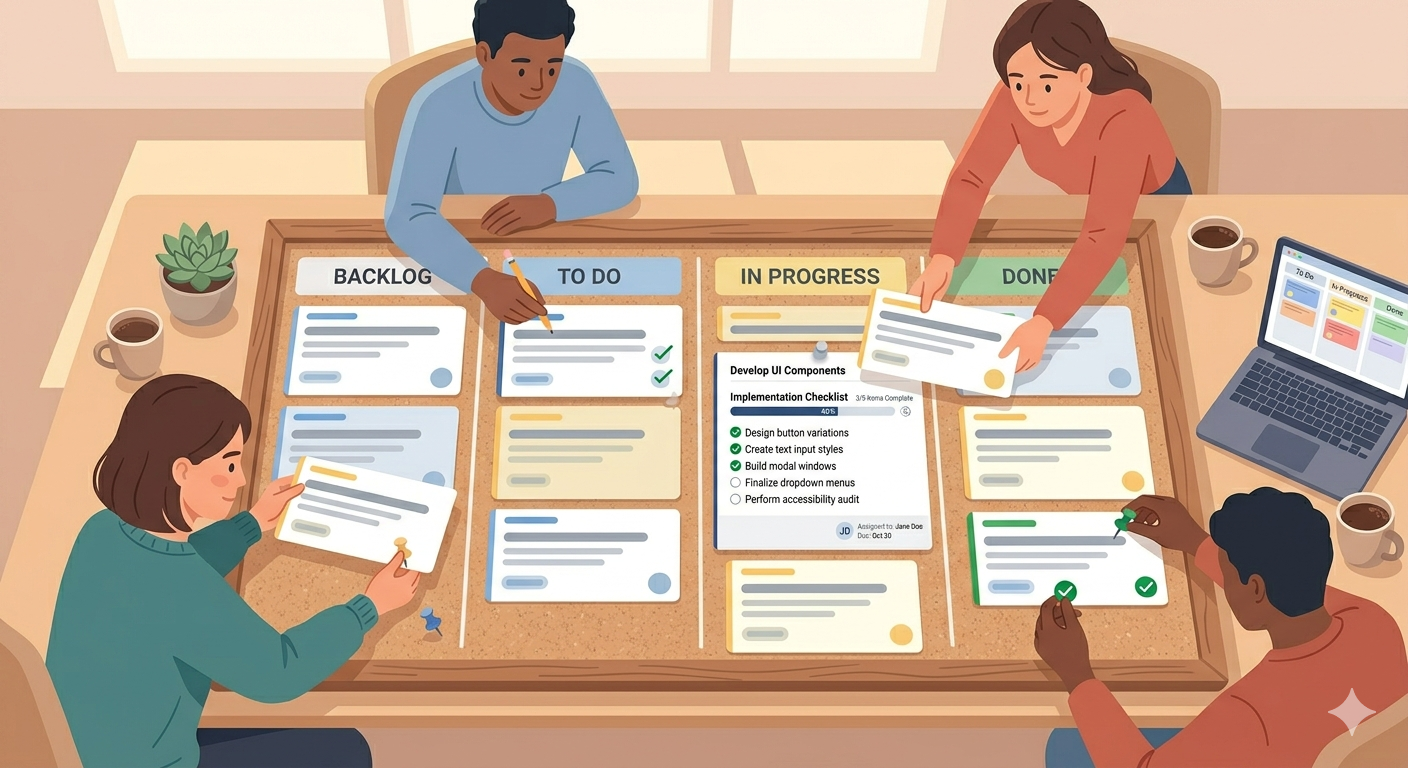
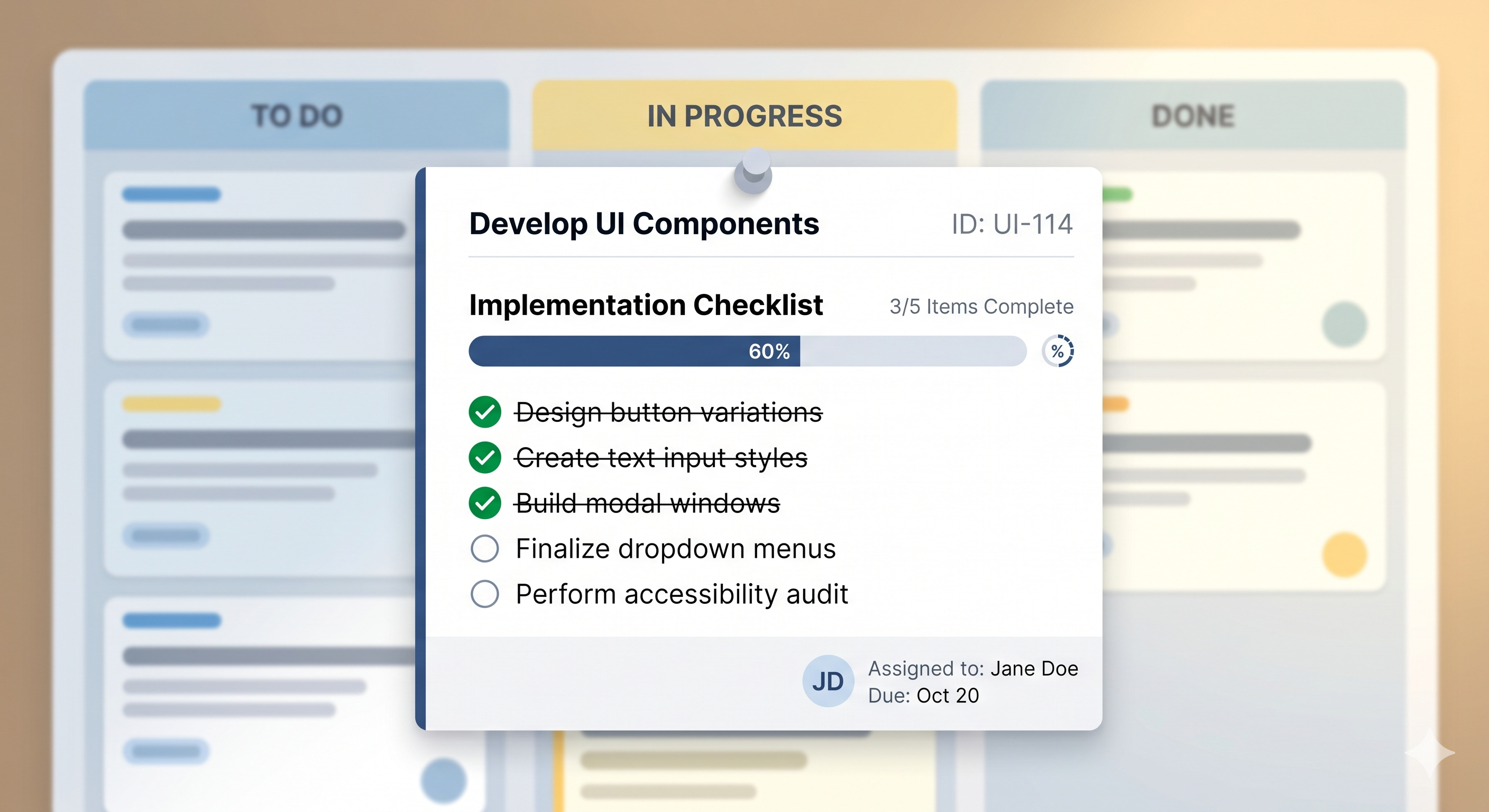
A Kanban board gives you exactly this. Three columns — To Do, In Progress, Done. Cards you can drag around. Priorities. Deadlines. Everything visible at a glance.
No sprints to plan. No backlogs to groom. No workflows to configure before you can create your first task.
When Jira Makes Sense (And When It Doesn't)
Let's be fair. Jira makes sense when:
— Your team has 10+ developers working on the same product
— You need detailed sprint planning and reporting
— Your workflow has many stages and approval steps
— You're already deep in the Atlassian ecosystem
Jira doesn't make sense when:
— You're a freelancer or solo worker
— Your team is small and moves fast
— You just need to track tasks, not manage a software release
— You spend more time setting up the tool than doing actual work
There's no shame in admitting a tool is too big for your needs. It doesn't mean your work is less important. It means you're smart enough to pick the right tool for the job.
A Simpler Way to Work
That's why we built SimplyKanban. It's a clean, fast Kanban board for people who want to manage their tasks without the overhead.
You sign up. You see your board. You add tasks. You move them. That's the whole experience.
No configuration. No permissions to set up. No "let me watch a YouTube tutorial first." Just a board that works the moment you open it.
Here's what you get with the free plan:
— Unlimited tasks with drag-and-drop
— Priorities from Low to Fire
— Deadlines that actually show you what's overdue
— Sort, filter, and search across all your tasks
— Works on desktop, tablet, and phone
— No ads, no tracking, no data selling
It's not trying to replace Jira for big teams. It's built for everyone else.
Keep It Simple
The best tools disappear into your workflow. You don't think about them — you just use them. That's what a good Kanban board should feel like.
If Jira works for you, great — keep using it. But if it feels like too much, you don't have to force it.
→ Try SimplyKanban free at simplykanban.online/register
Your tasks deserve a home that's easy to use. Not one that needs a manual.